Wondering how a deaf composer gave the world its most famous choral symphony? The Beethoven ninth symphony history runs from a long wait to a Vienna premiere on 7 May 1824, and an audience that would not stop applauding.
This guide is one of our studies of the classical music periods and the works that defined them.
| Item | Value |
|---|---|
| Premiere date | 7 May 1824, at 7 pm |
| Venue | Theater am Kärntnertor, Vienna |
| Conductor | Michael Umlauf, with Beethoven also on stage |
| Chorus size | About 80 singers |
| Vocal soloists | Four |
| Audience reaction | Five standing ovations |
Details come from WETA Classical and HISTORY. Historical figures such as chorus size are estimates and can change as scholars revise them, so check the sources before you rely on them.
What made the Ninth different from other symphonies?
Beethoven’s Ninth is listed by Wikipedia as a transitional work between the Classical and Romantic periods, which makes it a useful marker of change.
Beethoven’s ninth and final symphony broke with the habits of its day. According to HISTORY, it required the largest orchestra Beethoven had ever employed, and it was unusual at the time for adding voices to the instruments.
A symphony was expected to be purely instrumental. Here the orchestra leads, for three movements, into a finale where a chorus and four soloists join in.
The words of that finale are adapted from a poem by Friedrich Schiller, “Ode to Joy”. The choral section has since moved far beyond the concert hall and become one of the most recognisable tunes in classical music.
It is worth remembering what the symphony asked of its first players:
- An orchestra bigger than any Beethoven had used before.
- A chorus and solo singers in a symphonic finale.
- An orchestra whose exact size is still in dispute, according to WETA.
Composition and the plan for Berlin
Wikipedia’s entry on the symphony gives the composition years as 1822 to 1824, with a dedication to King Frederick William III of Prussia. The work runs for 65 to 70 minutes and has four movements.
The text was adapted from Schiller’s “An die Freude”, a poem written in 1785 and revised in 1803, with additional text written by Beethoven.
Vienna was not the city Beethoven first had in mind. Although most of his major works had been premiered there, he planned to have his latest compositions performed in Berlin as soon as possible, because he believed he had fallen out of favor with the Viennese.
The same article adds that musical taste in Vienna was then dominated by Italian operatic composers. The Vienna premiere went ahead anyway, and it is the one that history remembers.
The concert of 7 May 1824
The evening was billed as a “Grand Musical Academy”. WETA Classical records that it took place on Friday, 7 May 1824, at 7 pm, at the Theater am Kärntnertor in Vienna.
The Ninth was not the only work on the programme. The programme also included three sections of the Missa Solemnis: the Kyrie, Credo and Agnus Dei.
Those Mass movements were sung in German. That was done to satisfy Vienna’s ban on performing liturgical works in a public secular space.
Who was in the hall
Wikipedia describes this as Beethoven’s first onstage appearance since 1814. The hall was packed with an eager and curious audience, including Franz Schubert, Carl Czerny and the Austrian chancellor Klemens von Metternich.
That page also says the premiere involved an orchestra nearly twice as large as usual. Among the soloists, the German soprano Henriette Sontag was 18 years old when Beethoven asked her to perform.
Who performed
The chorus seems to have numbered about 80, with four vocal soloists. One of them was the 20-year-old contralto Caroline Unger, who would play a memorable part at the end of the night.
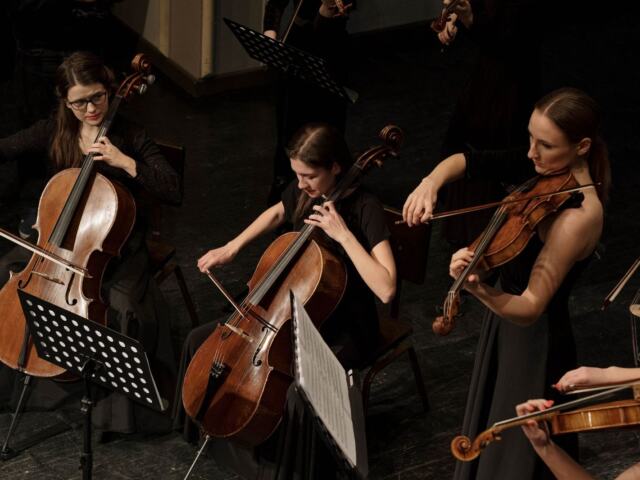
The exact size of the orchestra is in dispute, according to WETA. It describes 24 violins divided evenly between firsts and seconds, ten violas, mostly paired woodwinds, eight horns, four trumpets, trombones and a percussion section with timpani, triangle, cymbals and bass drum.
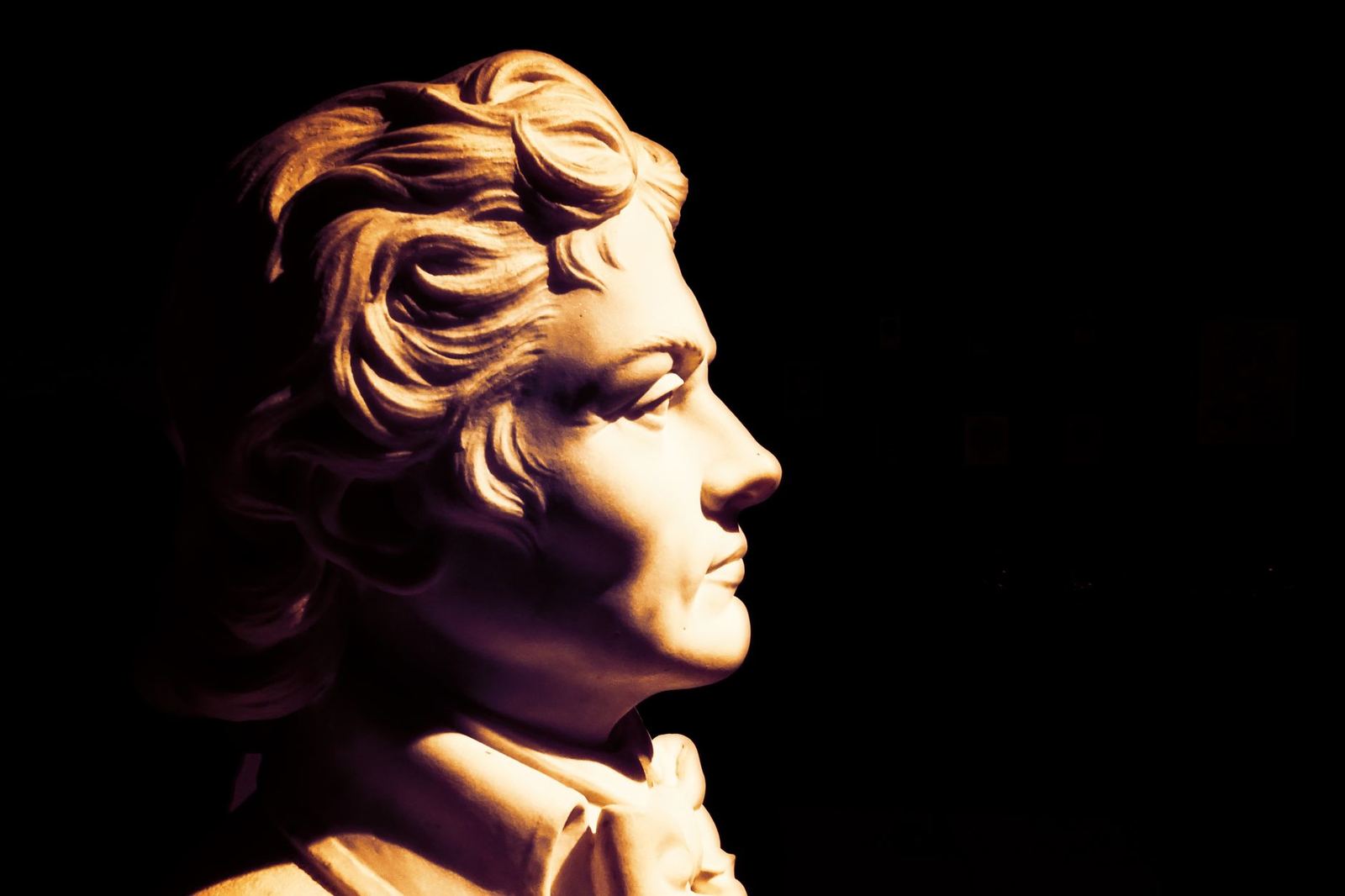
Who actually conducted the premiere?
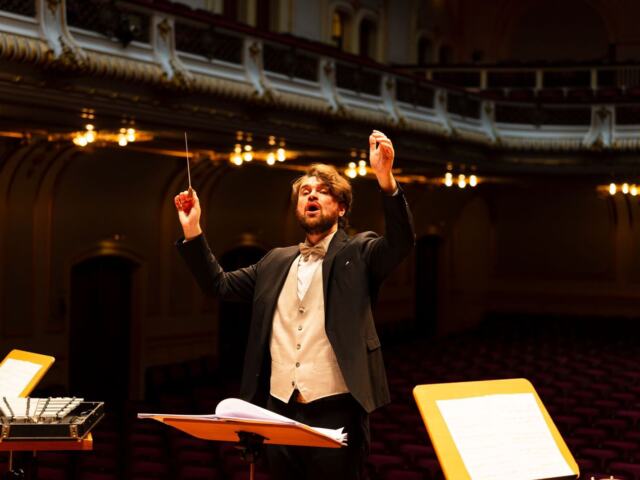
Two people presided over the performance. WETA names Michael Umlauf as conductor, and Beethoven himself.
Umlauf had also conducted the Fidelio premiere a decade earlier, so he knew how to work with the composer. By then Beethoven had lost his hearing, and he could not follow the performance as a conductor normally would.
The solution was a polite fiction. HISTORY says Beethoven stood on stage and appeared to conduct, but the players were instructed to ignore him and follow Umlauf instead.
WETA adds that Umlauf had discreetly warned the musicians not to follow the composer. Beethoven insisted on conducting too, and the musicians probably buried their heads in their difficult parts and watched Umlauf to stay together.
The ovation Beethoven could not hear
The most repeated moment of the evening comes after the finale. As Beethoven could not hear the applause, HISTORY reports that Unger had to turn him to face the audience.
The listeners hailed him with five standing ovations, raising their hats and handkerchiefs in the air. The gesture let a composer who could not hear the room see how it felt.
Wikipedia notes that testimonies differ on the timing. Either at the end of the scherzo or the end of the symphony, Beethoven was several bars off and still conducting when Unger gently turned him around.
It also reports that the scherzo was reportedly interrupted completely at one point by applause.
It is a striking scene because it joins two facts about the work. The music was written by a man cut off from sound, and it ended with a celebration of shared joy.
Why the Ninth still matters
HISTORY notes that the symphony is now widely considered one of the greatest pieces of music ever written. Its finale is one of the most often-played and easily recognised pieces of music of all time.
In the 20th century, an instrumental arrangement of the chorus was adopted by the Council of Europe, and later the European Union, as the Anthem of Europe, per Wikipedia. In 2001 the original hand-written manuscript, held by the Berlin State Library, was added by UNESCO to its Memory of the World International Register, becoming the first musical score so designated.
Its choice to bring voices into a symphony opened a door for later composers. For the wider setting, the history of the piano shows how Beethoven’s instruments changed alongside his ambitions.
For another famous work shaped by circumstances around its first performance, the mozart requiem story makes a good companion read.
Frequently asked questions
When was Beethoven’s Ninth first performed?
Show answer
It was first performed on Friday, 7 May 1824, at the Theater am Kärntnertor in Vienna, according to WETA Classical.
Did Beethoven conduct the premiere?
Show answer
He stood on stage and appeared to conduct, but HISTORY says the players were told to follow Michael Umlauf, the actual conductor.
What text does the finale use?
Show answer
The choral section is adapted from Friedrich Schiller’s poem “Ode to Joy”, as HISTORY describes.
What else was on the premiere programme?
Show answer
Alongside the symphony, the concert offered the Kyrie, Credo and Agnus Dei, three parts of Beethoven’s Missa Solemnis.