Wondering how the instrument on your teacher’s stage got so big and so loud? The history of the piano runs from a harpsichord maker’s experiment around 1700 to the iron-framed concert grand of the nineteenth century.
This piece is part of our guide to classical music periods, and it follows the instrument through them.
| Item | Value |
|---|---|
| Invention of the first piano (Cristofori, Florence) | Around 1700 |
| Surviving Cristofori pianos | Three |
| Full iron frame (Alpheus Babcock) | About 1825 |
| Steinway overstrung square grand shown | 1855 |
Figures come from the Linda Hall Library and Shaffer Pianos. Dates for early piano developments vary between sources and can change as scholars revise them, so check the source before you rely on them.
Before the piano: plucked strings and soft voices
A harpsichord plucks its strings with a small quill, so pressing a key harder or softer makes almost no difference to the sound.
The clavichord could vary its tone, but it was very quiet. Composers and players wanted something that could sing, whisper and shout from the same keys.
Cristofori and the first pianoforte
The answer came from Florence. Bartolomeo Cristofori, originally from Padua, was recruited by Prince Ferdinando de’ Medici and became a skilled builder of harpsichords and clavichords. He is best known for a new instrument he invented around 1700, an “arpicembalo” that produced sounds both “piano e forte”.
The novelty lay in how the sound was made. In Cristofori’s pianoforte the strings are struck by a small leather-covered hammer instead of plucked by a quill.
That raised a hard engineering problem. If a hammer is coupled directly to the key, it stays in contact with the strings too long and dampens the overtones. Cristofori found a way to release the hammer just before the moment of impact, so it can strike and fall back unhindered and let the strings resonate freely.
We do not know how many instruments he built, but three survive.
The fortepiano of Haydn, Mozart and early Beethoven
After Cristofori, other makers built pianofortes with hammer actions based on his work. Broadwood of London and Erard of France followed soon after, and each helped shape the instrument over the following generations.
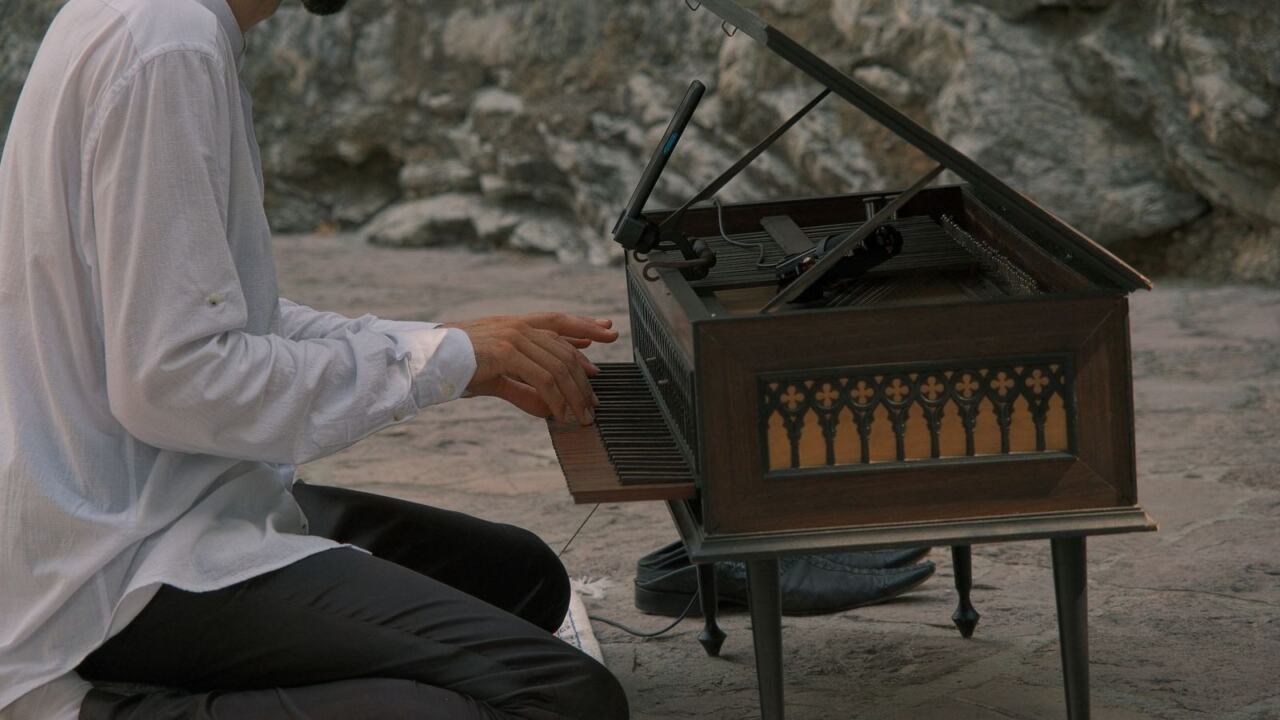
The eighteenth-century fortepiano was lighter than a modern piano. It had a wooden frame, thin strings and a clear, quick tone that suited the transparent textures of Classical-era writing.
It could do what the harpsichord could not: a phrase could swell, fade or be sharply accented by touch alone. That ability helped the piano become the natural home for the dramatic, speaking style of the late eighteenth century.
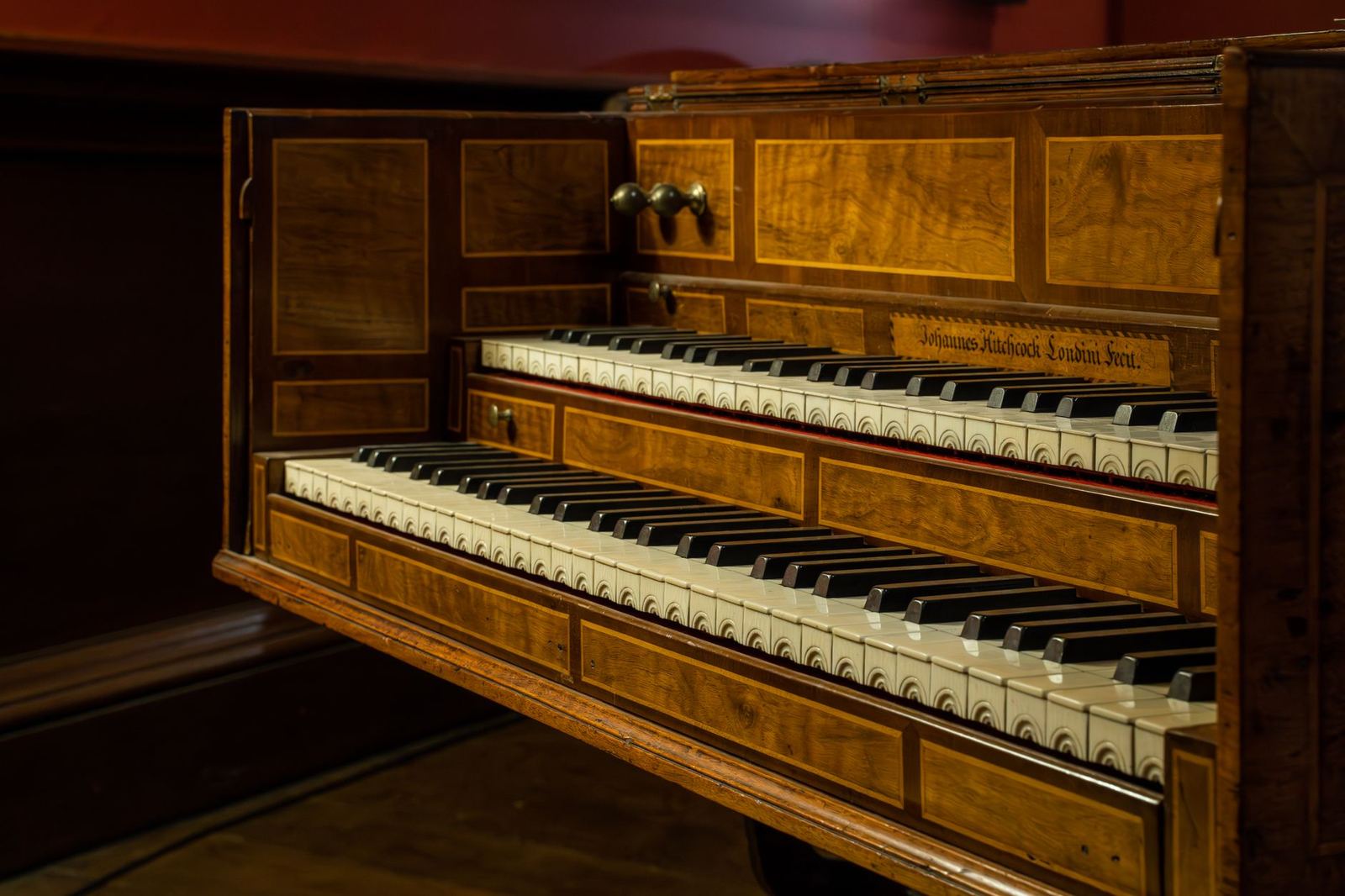
Listening to a restored instrument from this period is a useful exercise. Fast passages stay crisp, quiet passages feel intimate, and the contrast between loud and soft sounds sharper than you may expect, even though the instrument is physically smaller and gentler than a modern grand.
Why composers kept asking for more
Early great composers did not need a keyboard much wider than the traditional five octaves.
By 1818, however, Beethoven was composing music that went beyond six octaves. It has been contended that he, through his composing, pushed piano makers toward instruments with greater range.
Whatever the exact cause and effect, the pattern is clear. As composers wrote bigger, louder and more virtuosic music, makers answered with stronger, wider instruments. The same ambition drove the orchestra in those years; our look at the history of the symphony covers that side of the story, and the beethoven ninth symphony history shows where it led.
Erard, iron and the modern grand
Three technical advances turned the fortepiano into the modern grand. Each solved a separate problem.
- Repetition. The double escapement action was designed and patented by Sébastien Érard in 1821-22. It lets a key be sounded again and again, rapidly, even before it has returned to its point of rest.
- Strength. Makers first used iron bars and metal hitch-pin plates as bracing inside wooden frames. In about 1825, Alpheus Babcock produced a full iron frame, which could bear far more string tension.
- Richness. Overstringing crosses the bass strings over the others. In 1855, Steinway showed its overstrung square grand.
Before the full cast-iron frame reached widespread use, iron bars and metal hitch-pin plates were commonly used for bracing, especially during the second quarter of the 19th century.
Together, these changes gave pianists a heavier, more sustained and more powerful instrument. A pianist could now fill a large hall without an orchestra’s help.
From concert hall to living room
The grand was never the only shape. Square pianos, and later uprights, took the instrument into ordinary homes, where space and price mattered more than concert-hall power.
Many fine American piano companies made carved square grands throughout the 1800s, including Chickering, Knabe, Steinway and Mathushek. When Americans became serious about upright production, around 1860, they used the overstrung scale and full iron frame.
This spread matters for music history. Amateur players could now meet the piano, its sonatas, songs and arrangements of orchestral works at home. Much of the public’s first contact with large-scale music came through a piano in the parlour rather than a concert hall.
The home piano also changed how composers earned a living, because printed music for it could reach far more buyers than any single concert could. That market helped keep the instrument at the centre of musical life.
What changed for the sound
Put a fortepiano beside a modern concert grand and the differences are easy to hear. The older instrument is lighter and more articulate, and its notes die away quickly. The modern one has a longer-sounding, weightier tone that blends chords into a single wash of sound.
- Early pianos favour clarity of line, which suits Mozart and Haydn.
- Iron-framed pianos favour power and sustain, which suits late Romantic showpieces.
- Neither is simply “better”: they are different tools for different music.
Many performers today play eighteenth-century works on replicas of period instruments to hear what the composer expected. Others use a modern grand and adjust their touch. Both approaches are valid ways to approach the repertoire.
Frequently asked questions
Who invented the piano?
Show answer
Bartolomeo Cristofori, a harpsichord maker working for the Medici court in Florence, invented it around 1700, according to the Linda Hall Library.
What is the difference between a fortepiano and a modern piano?
Show answer
A fortepiano has a lighter wooden frame and a quicker, clearer tone. The modern piano gained a full iron frame, repetition action and overstringing in the nineteenth century, which made it louder and more sustained.
How many Cristofori pianos survive?
Show answer
Three survive, according to the Linda Hall Library, though nobody knows how many he built.
What did Érard contribute?
Show answer
His repetition action lets a pianist sound the same note again very quickly, before the key has fully risen. Modern grand actions still work on that principle.