Facing four long operas and no idea where to start? This Wagner Ring cycle explained guide gives you the short answer: one story of a stolen gold ring, told across four evenings, about fifteen hours in all.
The Ring sits at a high point in the history of opera, and it helps to see where it fits.
| Item | Value |
|---|---|
| Number of operas | Four |
| Total playing time | About 15 hours |
| Time Wagner spent on it | About twenty-six years (1848 to 1874) |
| First complete performance | 13 to 17 August 1876 |
| Wagner’s own label | Bühnenfestspiel (stage festival play) |
These figures come from the Wikipedia article on Der Ring des Nibelungen. Timings vary with the conductor, and details can change, so check the source before you rely on them.
What is the Ring cycle?
The Ring is a sequence of four music dramas by Richard Wagner, who wrote both the words and the music. Its full name is Der Ring des Nibelungen, “The Ring of the Nibelung”.
Wagner called the whole thing a Bühnenfestspiel, a “stage festival play”. He built it in three days preceded by a Vorabend, a “preliminary evening”.
The four parts, in order, are:
- Das Rheingold (The Rhinegold), the preliminary evening
- Die Walküre (The Valkyrie), the first day
- Siegfried, the second day
- Götterdämmerung (Twilight of the Gods), the third day
Wagner wrote the libretto and the music over about twenty-six years, from 1848 to 1874. That is a long time to carry one idea, and you can hear the style change as the work goes on.
The story in plain English
The plot turns on a magic ring that gives its owner the power to rule the world. The dwarf Alberich steals gold from the Rhinemaidens in the river Rhine and forges the ring.
Wotan, the chief of the gods, then steals the ring from Alberich with help from the god Loge. He has to hand it over to the giants Fafner and Fasolt as payment for building Valhalla, the home of the gods. If he refused, they would take Freia, who provides the golden apples that keep the gods young.
From there the story follows who owns the ring, and what owning it does to them. Power, greed and love pull against each other through all four evenings.
Evening by evening
- Das Rheingold: the theft of the gold, the making of the ring, and the gods’ bargain over Valhalla.
- Die Walküre: the human Siegmund and the Valkyrie Brünnhilde, Wotan’s daughter. She defies her father to try to save Siegmund and loses her immortality.
- Siegfried: Siegmund’s son grows up and takes on the ring’s fate.
- Götterdämmerung: the story ends. Brünnhilde gives the ring back to the Rhinemaidens as she dies on Siegfried’s funeral pyre.
The Rhinemaidens begin the cycle by guarding the gold, and they end it by getting the ring back. That loop gives the story its shape.
How Wagner’s music tells the story
The Ring depends on leitmotifs, which are recurring themes or harmonic progressions. A short musical idea can stand for a character, an object or a feeling, and it returns when that thing matters again.
Wagner himself did not use the word “leitmotif”, although the technique became known by it. He also relaxed some of his self-imposed restrictions as the work progressed.
For a first-time listener, this gives you something to listen for:
- When a theme returns, ask what it is reminding you of.
- When a theme changes shape, ask what has changed in the story.
- When the orchestra says one thing and a character says another, trust the orchestra.
The style is far from the set-piece structure of earlier opera. If you want to compare, read our guide to opera seria vs opera buffa, where the music is built from separate arias and recitatives.
First performances and Bayreuth
The operas reached the stage in stages. Das Rheingold was first given on its own on 22 September 1869, and Die Walküre followed on 26 June 1870.
Those earlier “special previews” at the National Theatre in Munich came at King Ludwig’s insistence and over Wagner’s objections. Wagner’s plan was always to give the operas together as a cycle.
The first Bayreuth Brünnhilde was Amalie Materna. Her horse, Cocotte, was donated by King Ludwig to play Brünnhilde’s horse Grane, so even the animals in the Ring have a backstory.
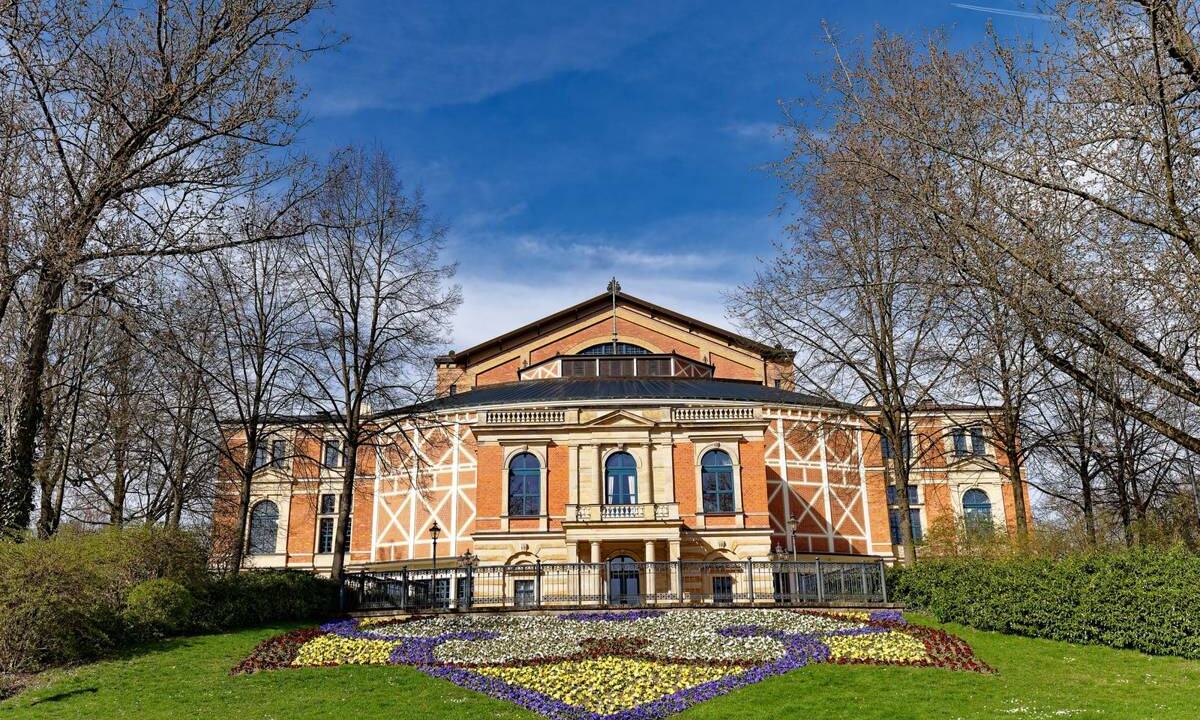
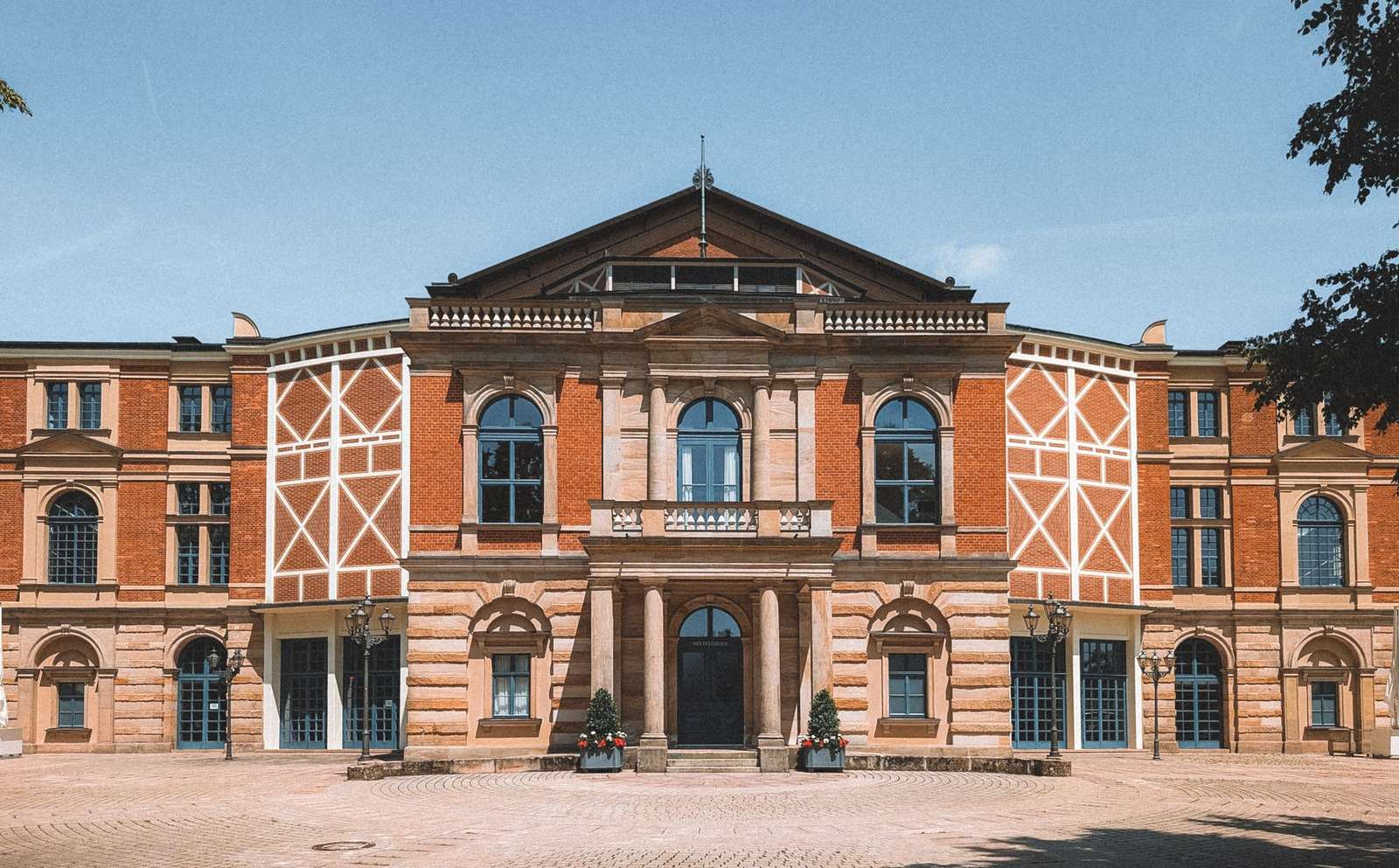
The first performance as a cycle opened the first Bayreuth Festival in 1876. It began with Das Rheingold on 13 August and ended with Götterdämmerung on 17 August.
Bayreuth remains tied to Wagner’s name. If you are curious about a very different kind of house with its own long story, our la scala history piece is a good companion read.
Who’s who among the characters
The cast is large, but a handful of names carry the story. Wagner wrote the gods for particular voice types, which helps you tell them apart when you listen.
- Wotan: king of the gods and god of knowledge, a bass-baritone.
- Fricka: Wotan’s wife, queen of the gods and goddess of marriage, a mezzo-soprano.
- Freia: Fricka’s sister, goddess of love and youth, a soprano.
- Froh: Fricka’s brother and god of fertility, a tenor.
- Alberich: the Nibelung dwarf who forges the ring.
- Brünnhilde: Siegfried’s lover and Wotan’s daughter.
Beyond the gods you meet giants, dwarfs, mortals, Valkyries and the three Rhinemaidens. Each group has its own sound, and a leitmotif often tells you who is on stage before you see them.
It is also worth knowing that later productions have reworked the story. One version tells it from Brünnhilde’s viewpoint and has a distinct feminist angle, which shows how open the Ring is to new readings.
How to approach it as a newcomer
You do not have to sit through the whole thing at once. The operas are often performed separately, and they contain dialogue that mentions earlier events, so a viewer can watch any one of them without having seen the others.
A sensible plan looks like this:
- Read the short plot summary above before the first note.
- Start with Das Rheingold, which covers the theft of the gold, the making of the ring and the central bargain over Valhalla.
- Follow the libretto or surtitles. The text matters as much as the music.
- Take each evening separately, and leave a gap if you need one.
- Come back to the cycle later and listen for what you missed.
A full performance runs about fifteen hours over four nights, depending on how the conductor paces it. Treat it as a festival, not a marathon.
Frequently asked questions
How many operas are in the Ring cycle?
Show answer
There are four: Das Rheingold, Die Walküre, Siegfried and Götterdämmerung, performed in that order.
How long does the whole Ring take?
Show answer
A complete performance takes about 15 hours across four nights, depending on the conductor’s pacing.
Can I watch just one opera from the Ring?
Show answer
Yes. The operas are often performed separately, and their dialogue recalls earlier events, so each can be followed on its own.
When was the Ring first performed as a complete cycle?
Show answer
It opened the first Bayreuth Festival in 1876, from 13 August to 17 August.