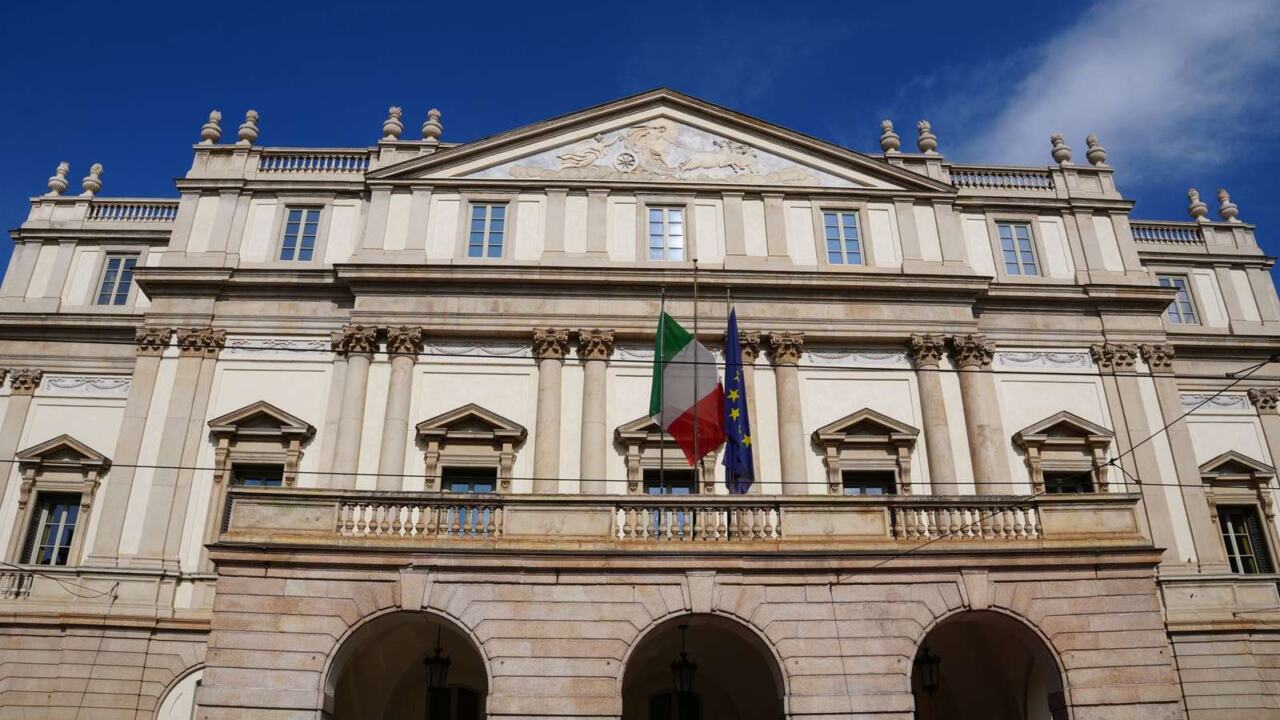
Wondering how Milan’s famous opera house came to be? La Scala history runs from an empress’s commission, through wartime bombing, to a modern restoration.
This piece is one of our guides within the wider history of opera.
| Item | Detail |
|---|---|
| Official opening | 3 August 1778 |
| Architect | Giuseppe Piermarini |
| Building work | 1776 to 1778 |
| Air-raid damage | Night of 15–16 August 1943 |
| Reopening concert | 11 May 1946, conducted by Arturo Toscanini |
| Major modern restoration | January 2002 to December 2004, by Mario Botta |
These dates come from the Museo Teatrale alla Scala and Italy On This Day.
Why was La Scala built?
Milan already had an opera house, the Teatro Regio Ducale. A fire destroyed it, and the city needed a new home for opera.
The empress, Maria Theresa of Austria, appointed the architect Giuseppe Piermarini to build a new theatre. According to the Museo Teatrale alla Scala, the work was completed in just two years, from 1776 to 1778.
The site was not empty ground. It was the degraded area around the Church of Santa Maria della Scala, which was named in honour of Beatrice Regina della Scala, the wife of Bernabò Visconti. The theatre took its name from that church, and the name has stuck ever since.
Money came from the people who would use it. Italy On This Day says the cost was met by 90 patrons, who paid in advance for their boxes. That arrangement shaped the horseshoe of private boxes that still defines the look of an Italian opera house.
The opening night of 1778
The official opening took place on 3 August 1778. The work premiered that night was Antonio Salieri’s L’Europa riconosciuta.
An opening night for a new theatre was a civic event. The premiere announced that Milan now had a stage worthy of its ambitions, and that it had patrons willing to pay for it.
Salieri is better remembered today through legend than through his music. It is worth remembering that he was a leading opera composer of his day, and the new house chose him for its first night.
The Museo Teatrale alla Scala describes the new house as the Teatro Grande alla Scala, destined to become one of the most important focal points for both Italian and European culture. That ambition was tied to Milan’s position within the Austrian sphere at the time.
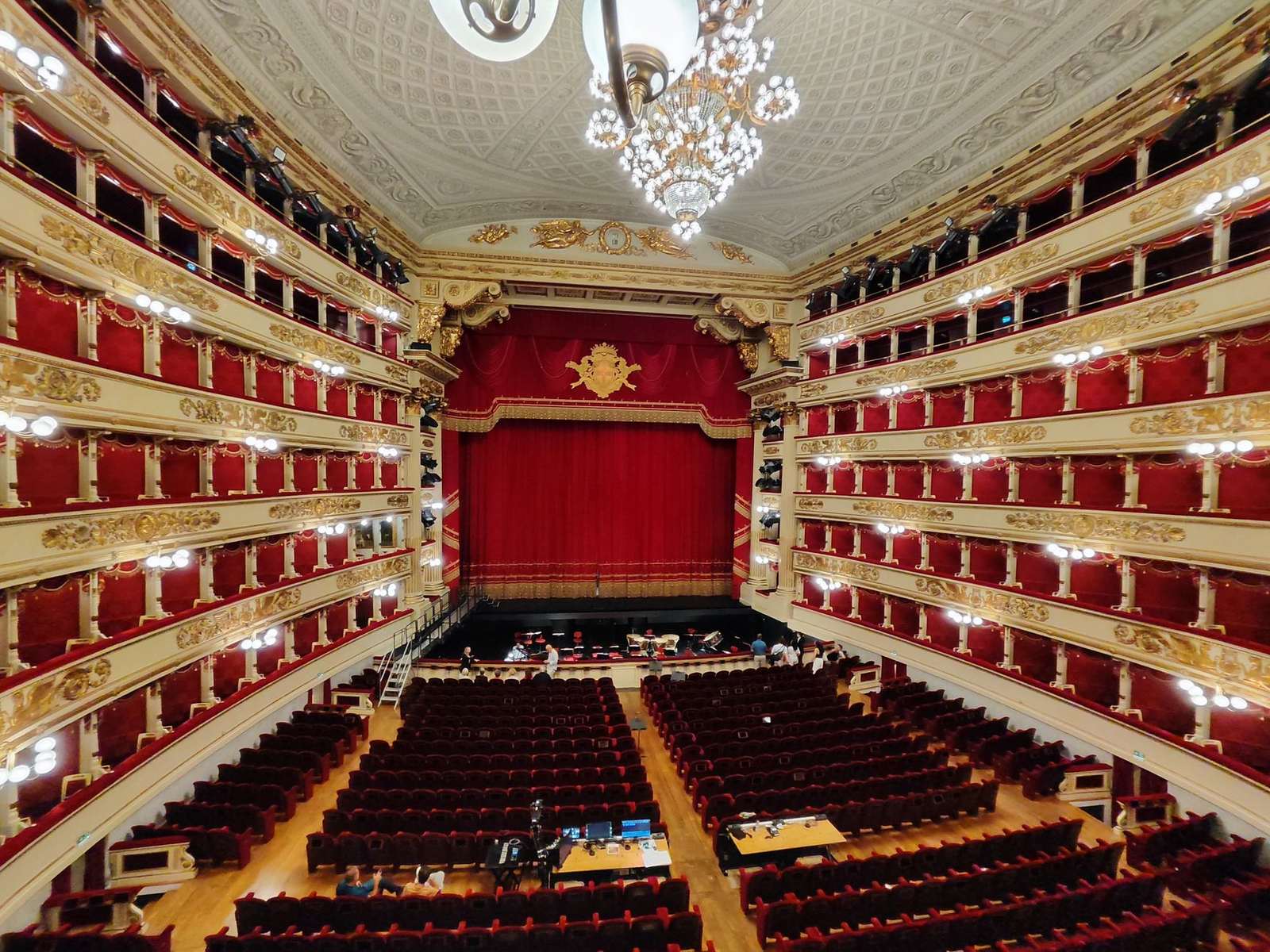
A house for the great Italian composers
Over the following decades the theatre became a place where Italian opera was made, not just performed. Italy On This Day notes that the world’s finest singers have appeared there, and that the theatre has hosted premieres of operas by Rossini, Donizetti, Verdi and Puccini.
That list covers much of the central Italian repertory. Few other houses can claim such a concentration of the central Italian repertory under one roof, and that concentration explains much of the theatre’s lasting reputation among singers, conductors and audiences.
The private boxes also tell us something about how opera worked socially. Families treated their boxes as a kind of second drawing room, and an evening at the theatre was as much about being seen and meeting people as about listening. As the same source tells it, 90 patrons covered the expense of building by paying for their boxes ahead of time.
A practical detail from the same source shows how the building was run. Because candle and lamp light made fire a constant danger, the theatre managers always kept hundreds of buckets of water in the rooms next to the auditorium.
- Rossini: premieres at the house, according to Italy On This Day.
- Donizetti: likewise listed among the house’s composers.
- Verdi: a central figure in its repertory.
- Puccini: the last of the four names the source lists.
Operas from other places have been played here too. If you are curious about German epics, our guide to the wagner ring cycle explained sets out a very different tradition from the Italian one.
Toscanini and the early twentieth century
Italy On This Day records that the original eighteenth-century structure was renovated in 1907. It also says Arturo Toscanini was twice La Scala’s principal conductor.
His name is tied to the house more strongly than almost any other conductor’s. That is why the choice of Toscanini for the postwar reopening mattered so much to Milan.
The bond between a conductor and a house can shape its sound and its standards. At La Scala, Toscanini’s two periods in charge became part of the theatre’s reputation.
Italy On This Day also says Toscanini conducted the concert that marked the 1946 reopening, after the theatre had been rebuilt following bomb damage in the Second World War.
The renovation recorded in 1907 shows that the building was never frozen in time. Like most old theatres, it was adjusted whenever safety, comfort or stage technology demanded it.
Bombs, reconstruction and rebirth
The Second World War brought the worst damage in the theatre’s history. On the night between 15 and 16 August 1943, the Museo Teatrale alla Scala says, the theatre suffered considerable damage during air raids carried out by the Royal Air Force.
The theatre was rapidly rebuilt. On 11 May 1946 it reopened in all its original splendour with a memorable concert conducted by Arturo Toscanini, as the museum puts it.
Italy On This Day adds that the reopening concert included a soprano solo by Renata Tebaldi.
- 1778: the theatre opens with Salieri’s L’Europa riconosciuta.
- 1907: the original structure is renovated.
- 1943: air raids damage the building.
- 1946: Toscanini conducts the reopening concert.
- 2002 to 2004: Mario Botta’s restoration and modernisation.
The modern restoration
The most recent major chapter came with Mario Botta. The Museo Teatrale alla Scala states that between January 2002 and December 2004 he carried out the most profound work of restoration and modernization seen at La Scala since the end of the Second World War.
Botta’s work followed the pattern of earlier repairs: respect what survives, then adapt it for the present. The reconstruction after the war had a similar task, because a theatre is only useful if it can be used again.
The aim of such a project is to keep a historic house working as a modern theatre. For visitors, the result is a building that still speaks of its eighteenth-century origins while serving present-day productions.
Stories that reached the stage elsewhere belong to other chapters. Our la traviata story is one such tale of Verdi’s that you can read alongside this history.
Frequently asked questions
When did La Scala open?
Show answer
The official opening was on 3 August 1778, with Salieri’s L’Europa riconosciuta, according to Italy On This Day.
Who designed La Scala?
Show answer
The architect Giuseppe Piermarini, appointed by the empress Maria Theresa of Austria, according to the Museo Teatrale alla Scala.
What happened to La Scala in the Second World War?
Show answer
It was badly damaged in air raids on the night between 15 and 16 August 1943, and reopened on 11 May 1946 with a concert conducted by Toscanini.
Who led the latest big restoration?
Show answer
Mario Botta, whose work ran from January 2002 to December 2004, according to the Museo Teatrale alla Scala.