Curious what lies behind this tearjerker? The La Traviata story runs from a French play to a censored libretto and a jeered Venice premiere in 1853, then a successful revival.
| Item | Detail |
|---|---|
| Premiere | 6 March 1853, La Fenice, Venice |
| Source play | La Dame aux camélias (1852) by Alexandre Dumas fils |
| Original title | Violetta |
| Setting forced by Venetian authorities | The past (period setting) |
| Successful revival | 6 May 1854 |
These details come from Wikipedia’s La traviata article.
Verdi’s opera sits at a turning point in the history of opera, when composers began putting ordinary, contemporary people on stage. This guide follows the work from its literary roots to its troubled first night and its later rescue.
From a novel to a play: where the story began
The opera is based on La Dame aux camélias (1852), a play by Alexandre Dumas fils, which he adapted from his own 1848 novel.
Verdi had a chance to see the play for himself. He and Giuseppina Strepponi visited Paris from late 1851 and into March 1852.
The opera was originally titled Violetta, after the main character.
The busy years before La traviata
The commission for the new opera came from La Fenice in Venice, after the success of Rigoletto there.
Verdi and Giuseppina Strepponi were in Paris from late 1851 and into March 1852, so the composer was close to the Dumas play that had appeared in 1852 and that his new opera would be based on.
How Verdi and Piave built the opera
Francesco Maria Piave was engaged to write the new libretto, but Verdi complained that his librettist had not yet offered him an original or provocative idea. Verdi wrote that he did not want any of those everyday subjects that one can find by the hundreds.
The commission came from La Fenice after the success of Rigoletto there. Verdi was also wary of the Venetian censors, with whom he had already clashed over that earlier opera. Months passed, and in the autumn Piave went to Sant’Agata, Verdi’s home near Busseto, to work beside him.
At some point Verdi threw in another idea, which may have been La traviata. Verdi had written to Piave that he did not want everyday subjects, and the librettist had not yet offered him an “original” or “provocative” idea.
- Librettist: Francesco Maria Piave.
- Source: Dumas fils’s play, adapted from his novel.
- Theatre: La Fenice, Venice.
- Sticking point: the censors’ view of a modern setting.
The censors and the period setting
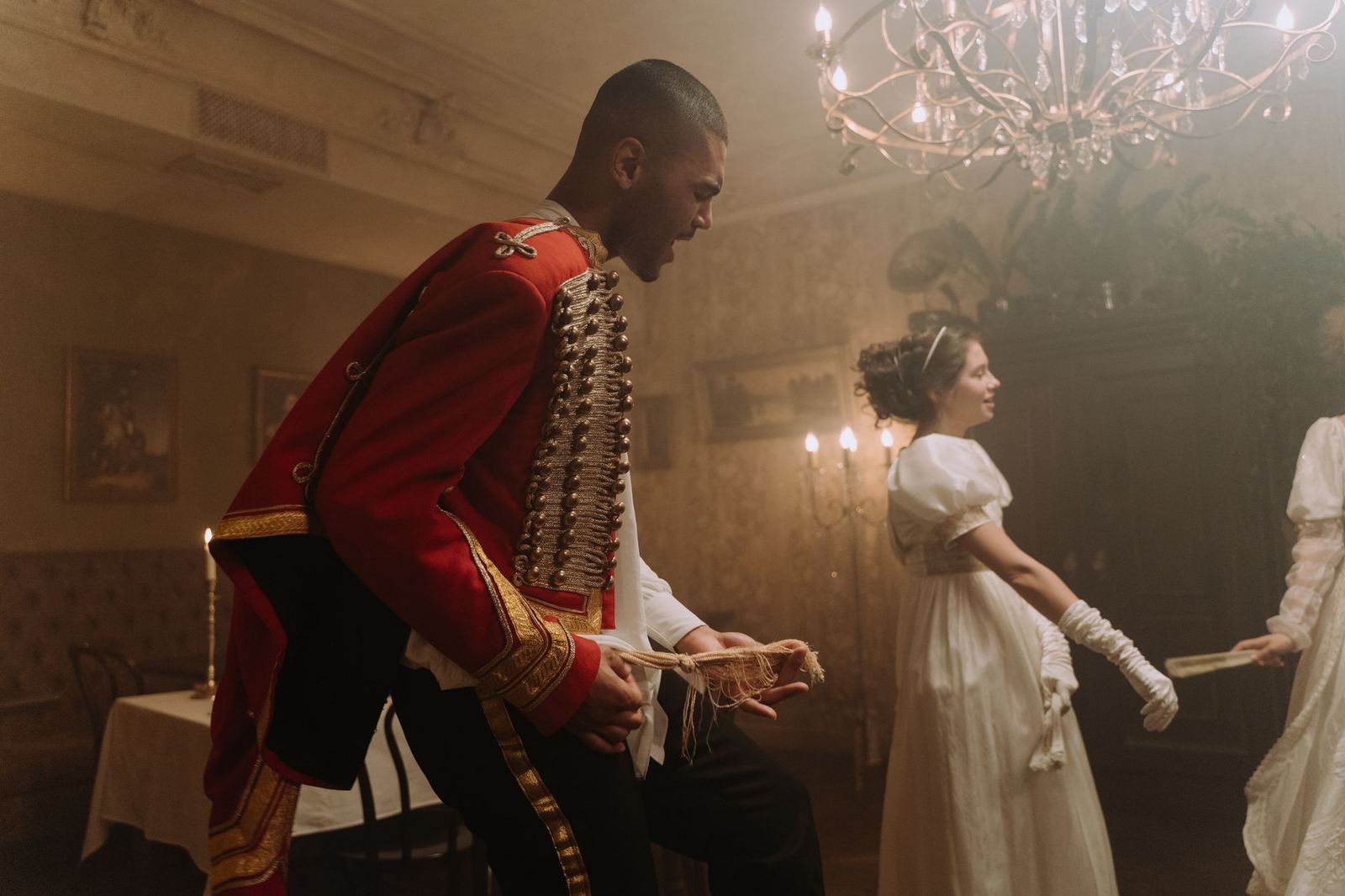
Piave and Verdi wanted to follow Dumas in giving the opera a contemporary setting. The authorities at La Fenice, however, insisted that it be set in the past.
Putting a modern scandal in period costume was a common way to soften it for official eyes. It also cut against what Verdi and Piave had wanted: a contemporary setting like Dumas’s.
The same tension runs through the genre’s long past. If you want to see how far opera had travelled from its beginnings, read about the first opera ever written.
A disastrous first night, then a triumph
Verdi arrived in Venice on 21 February 1853 filled with premonitions of disaster. He made his unhappiness clear to the singers before the premiere on 6 March 1853.
The audience jeered at times during the premiere, directing some of their scorn at the casting of soprano Fanny Salvini-Donatelli as Violetta.
Some revisions followed, mostly affecting the second and third acts. The opera was performed again on 6 May 1854 and was a great success, largely due to Maria Spezia-Aldighieri’s portrayal of Violetta. Venice, as the scholar Julian Budden put it, “made an honest woman of Violetta”.
A contemporary summary of the two outings was blunt: the first was a fiasco, and the second “has created a furore”.
What happens in the opera
The first act opens with a party in Violetta’s salon, and the action stays in Paris and its vicinity.
In the final act Violetta is dying. Dr Grenvil tells her maid Annina that Violetta will not live long since her tuberculosis has worsened. The title role dominates the work, and her music moves from the hectic, almost hysterical coloratura of the first act to the spiritual quality of her death scene.
Why the story still holds up
Much of the opera’s appeal lies in how it treats its heroine. Violetta is not a villain or a warning, but the emotional centre of the whole evening, and the music follows her from brittle brilliance to quiet resignation.
The setting matters too. A story about money, reputation and illness belonged to the world his audience knew. That is why the censors’ request to push it back in time mattered so much.
Three points are worth keeping in mind when you hear it:
- The first Venice production was hampered by casting and mood, not only by the score.
- The revised version of 1854 shows how much a singer’s portrayal can change an opera’s fortunes.
- The opera’s reputation grew through performance, not through a single triumphant opening night.
If you are new to the work, listen for the way Violetta’s vocal line changes from act to act. It is the quickest way to hear the drama that the first Venetian audience struggled to accept, and that later audiences embraced.
Seen this way, the La traviata story is also a story about theatres: the pressure of deadlines, the power of censors and the weight a single performer can carry.
How La traviata travelled
The opera spread quickly beyond Italy. It was first performed in the United States by the Max Maretzek Italian Opera Company on 3 December 1856 at the Academy of Music in New York.
Some listeners worried about the morals of the plot. The diarist George Templeton Strong noted that people said it was immoral, but he did not think it so much worse than many other plots.
For another landmark Italian house, see the la scala history guide.
Frequently asked questions
When was La traviata first performed?
Show answer
It was first performed on 6 March 1853 at La Fenice in Venice.
What is La traviata based on?
Show answer
Dumas fils’s stage drama of 1852 supplied the plot. He had drawn it from his own earlier novel.
Why was it first set in the past?
Show answer
Officials at La Fenice required a period setting, although Verdi and Piave preferred a modern one.
Was La traviata a failure at first?
Show answer
The audience jeered at times on the first night, notably at the casting of Violetta. A revised performance on 6 May 1854 was a great success.