Wondering how a Florentine experiment became a global art form? The history of opera runs from a small circle of scholars in Florence, through Venice’s paying public, to Wagner and Verdi. This guide walks you through it.
| Milestone | Detail |
|---|---|
| Origin of the form | Florentine Camerata, late 16th-century humanists |
| First opera, in Wikipedia’s account | Peri’s Dafne (1597) |
| Monteverdi’s landmark | L’Orfeo (1607) |
| Gluck’s reform opera, premiered in Vienna | Orfeo ed Euridice (1762) |
| Wagner’s complete Ring cycle | Bayreuth Festspielhaus (1876) |
These figures come from Wikipedia’s “History of opera” article. Dates for the earliest works vary between sources and can change, so check the source before you rely on them.
Where opera came from: the Florentine Camerata
Opera did not appear from nowhere. It began as a deliberate experiment: the Florentine Camerata was a group of late 16th-century humanists who sought to revive the musical and dramatic traditions of Ancient Greek theatre.
A group of scholars sponsored by Count Giovanni de’ Bardi formed the society. Florence under the patronage of the Medici had also become the main centre of intermedio production, the lavish musical interludes staged at court celebrations, and the birthplace of opera.
Those spectacles gave the Camerata a ready audience, a pool of skilled singers and a taste for stage machinery. The scholars wanted to bring something older and more serious into that setting.
Their guiding thought was that the drama of ancient Greece had somehow combined words and music. A single voice following the shape of speech, they reasoned, could carry feeling more directly than several voices weaving around each other.
This was an antiquarian project as much as an artistic one. The society was a group of scholars sponsored by Count Giovanni de’ Bardi, and it took shape as a humanist project before anything reached a stage.
That idea produced a new manner of delivery, in which a singer declaims a text over simple instrumental support. It is the seed of recitative, and it shaped everything that followed.
Peri and the first works
Wikipedia’s history says that opera appeared in 1597, when the first opera, Dafne, by Jacopo Peri, was created. The same account lists Peri’s Euridice (1600) among the early works that led up to Monteverdi.
Other sources give slightly different years for Dafne, which is one reason to treat the word “first” with care. If you want the full argument about which work deserves the title, the guide to the first opera ever written sets out the evidence.
These early pieces were made for courts and invited guests. Nobody bought a ticket.
Monteverdi and the birth of the Baroque stage
The leap from experiment to masterpiece came with Claudio Monteverdi. His L’Orfeo, dated 1607, helped define the genre.
Wikipedia’s account says Monteverdi added a musical introduction to the work, one that he gave a name of his own.
He also left a famous statement of priorities, quoted in the same account: “the word must be decisive, it must direct the harmony, not serve it.” That attitude would be argued over for the next four centuries.
The building blocks he handed on are still the vocabulary of opera:
- Recitative: sung speech that moves the plot forward.
- Aria: a more melodic, reflective number for one voice.
- Instrumental introductions: music that sets the scene before the singing starts.
- Chorus: the group voice inherited from Greek drama.
It helps to hear these elements one at a time. A recitative can sound plain at first, but in a good performance it carries the story, and the arias then feel like moments when time stops.
Venice: opera becomes a public entertainment
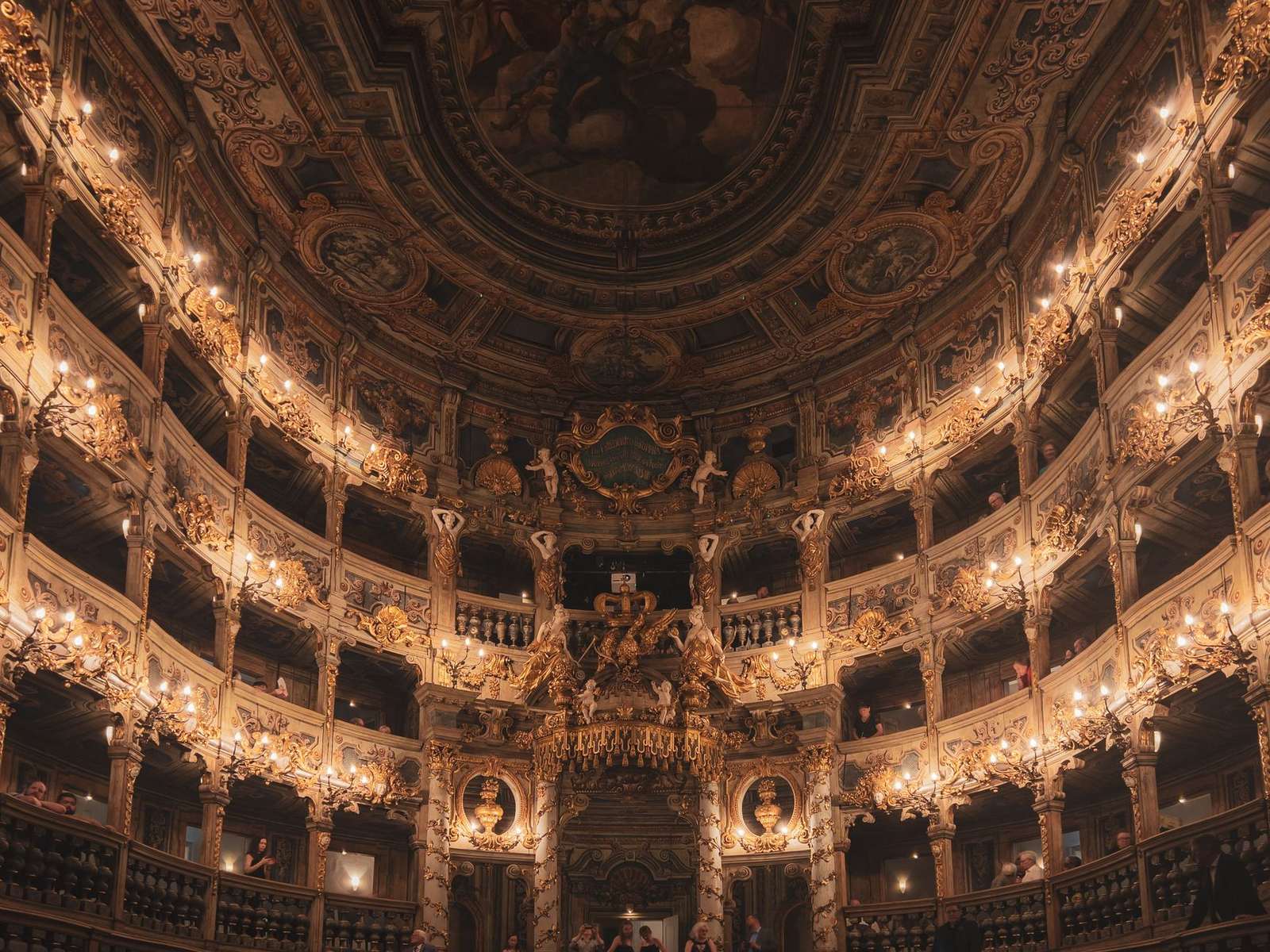
In the middle decades of the 17th century the major opera-producing centre was Venice. The decisive change was the public theatre, which meant that opera no longer depended on a prince’s invitation.
Wikipedia’s account says: “After the San Cassiano, the opening of new theaters flourished in Venice: Santi Giovanni e Paolo (1639), San Moisè (1640), Novissimo (1641)”. Competition between houses pushed impresarios to hire stars and to keep their audiences entertained.
The result was a more popular style. As the genre became more popular, comic elements were introduced and the texts were simplified, to the point where, especially in the arias, the interpretation was more important than the words.
That is a significant moment for anyone interested in how opera works as a business. A form that began as court ceremony turned into a commercial product, with all the pressures to please that this implies.
Singers, stars and the castrato
A paying public wanted celebrities. The castrato Siface was popular with the public, and his admirers included Christina of Sweden and Henry Purcell.
Later, Carlo Broschi, known as Farinelli, became one of the most famous castrati in history. The practice and its history deserve a closer look, which you will find in the profile of castrato singers.
For how voices are classified in the modern house, see the guide to opera voice types.
Opera travels: France and the rest of Europe
Throughout the seventeenth century opera spread throughout Europe, generally under Italian influence. France was one of the first countries to take it up after Italy, where it was called tragédie en musique.
In 1645 the first Italian opera, the pastoral La finta pazza, was performed in Paris, and two years later Luigi Rossi’s Orfeo caused a great sensation. France nonetheless built its own form rather than copying Italy.
The key figure was Jean-Baptiste Lully, a composer of Florentine origin whose real name was Giovanni Battista Lulli. The royal privilege passed to him, and he adapted opera to French taste, with choirs, ballets, a richer orchestra and musical interludes.
Pomone, premiered in 1671, was the first opera written in French. French fondness for dance later produced the opera-ballet, a hybrid in which sung parts alternated with danced interludes.
Elsewhere, local traditions grew around the Italian model:
- Portugal: opera was supported by King John V, who favoured the installation of Italian composers.
- Denmark: the Italian composer Giuseppe Sarti wrote the first opera in Danish, Gam og Signe (1756).
- France: Lully’s tragédie en musique and, later, the opera-ballet.
Court opera and public opera therefore lived side by side for a long time. The courts offered grandeur, large casts and ceremonial purpose, while the public houses offered novelty, rivalry and the pull of famous singers.
The pattern repeated in many places. A foreign form arrived with court backing, local composers absorbed it, and then they bent it toward their own language and taste.
Gluck, Mozart and the eighteenth-century stage
Opera seria and opera buffa
By the eighteenth century Italian opera had split into serious and comic traditions. The difference between the two types is explained in opera seria vs opera buffa.
Among the composers of opera buffa were Niccolò Piccinni and Baldassare Galuppi. Galuppi and the librettist Goldoni created the dramma giocoso Il filosofo di campagna (1754), their most famous joint work.
Comic opera brought everyday people onto the stage, with servants, tradesmen and clever young lovers alongside the nobles. Its lighter touch, quicker patter and sharper ensembles prepared the ground for what Mozart would do later.
Critics eventually objected that performance had overwhelmed the drama. Singers decorated arias for their own glory while the story stood still.
Gluck’s reform
Christoph Willibald Gluck led the counter-movement. His works include Orfeo ed Euridice (1762), Alceste (1767) and Paride ed Elena (1770), premiered in Vienna, and later Iphigénie en Aulide (1774) and Armide (1777), premiered in Paris.
His Paris success also fed a rivalry with Piccinni: both composed an Iphigénie en Tauride, and Gluck’s opera (1779) was more successful than Piccinni’s (1781).
The Classical period that followed emphasised clarity and balance, with major contributions from Mozart and Beethoven. For context on how opera fits into the wider story of that era, the overview of classical music periods is a helpful companion.
Mozart and the perfection of the ensemble
No composer used the Classical style on stage more brilliantly than Mozart. His great innovation was the vocal ensemble, in which several characters sing different things at once and the music still makes sense of them.
In one of his comic operas he introduced a sextet in act three. He also showed admirable psychological skill, using the clarinet for love, the oboe for grief and the bassoon for irony.
Don Giovanni dates from 1787. Mozart once commented that “poetry must be the obedient servant of music”, a neat reversal of Monteverdi’s famous remark.
Set the two quotations side by side and you have the central argument of the whole history: should the word lead the music, or the music the word? Almost every composer named here has an answer.
The Romantic century: bel canto, Verdi and Wagner
The century opened with the sparkling virtuosity of the bel canto school and closed with the huge orchestral textures of Wagner. In between, composers in several countries used opera to tell stories about their own history and identity.
In the nineteenth century opera was shaped by national feeling, and two traditions stood out: Italian lyricism and German music-drama. Both treated the stage as a place for large emotions.
Bel canto
Rossini, Bellini and Donizetti were staunch defenders of bel canto, at a time when the orchestra was becoming more and more prominent. If the term is new to you, what is bel canto explains the technique and its demands.
Wikipedia’s account says classical bel canto came to a virtual end with Rossini, while Bellini and Donizetti introduced some innovations. Rossini, Donizetti and Mayr still produced some farce.
Verdi
Verdi’s operas had a strong nationalist component, which turned his works into pleas against the foreign occupation of various regions of Italy. The famous chorus Va, pensiero is one example.
He gradually evolved toward musical drama, de-emphasising the aria without abandoning it. One of his best-loved works is the intimate drama told in la traviata story, a good starting point if you want a plot summary.
Wagner
Richard Wagner sought to bring all the arts together in a single creation, which he called a “total work of art”. Lohengrin (1850) was the first of his operas in which he eliminated arias and recitatives, with continuous melodic scenes.
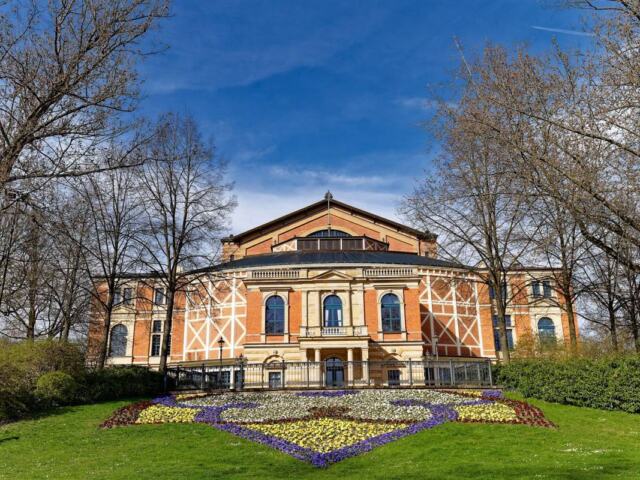
His next opera, Tristan und Isolde (1865), was a difficult work for the public. The tetralogy took him twenty-six years of work, and not until 1876 did he premiere the complete cycle at the Festspielhaus in Bayreuth, a new theatre sponsored by him for the performance of his operas.
The Bayreuth theatre matters for another reason. It was built specifically to present his own operas, which shows how far the composer’s authority had grown compared with the Venetian impresario or the court patron.
The cycle is vast and built on recurring musical themes. A step-by-step guide is available in wagner ring cycle explained.
Houses, realism and the modern stage
By the end of the nineteenth century opera had become an international language. Companies in many cities staged the same core works, and singers travelled to meet the demand.
Great opera houses became civic monuments. The most famous Italian example has its own story in la scala history, which follows the theatre across its long life.
In France, composers moved toward realism. Bizet premiered his masterpiece Carmen in 1875, an opéra-comique that introduced realistic elements, a phenomenon that in Italy would give rise to verismo.
Wikipedia’s overview adds that later developments included French impressionism and Italian verismo. Opera also took root far from Europe: in Canada, Joseph Quesnel was the first author of operas in that country.
If you collect scores, programmes or recordings, the guide to antique music collectibles gives a sense of what is out there.
Why the history still matters
Opera has always shifted between two priorities: the word and the voice. Monteverdi put the word first, the Venetian public and the bel canto era put the voice first, and Gluck and Wagner each tried to rebalance the whole.
Seen that way, the history is not a straight line of progress but a long argument. Every new generation of composers answers the previous one, and knowing the argument makes the repertoire easier to enjoy.
A practical way to begin is to listen in order. Each step shows what the previous generation left unresolved.
- Monteverdi: listen for how the voice follows the shape of the words, and how sparse the accompaniment can be.
- Gluck: notice how the arias serve the scene rather than stopping it.
- Mozart: follow the ensembles, where one scene holds several feelings at once.
- Verdi: hear how the chorus can speak for a whole people.
- Wagner: let the continuous music carry you, and listen for themes that return.
Do not worry about knowing the plot in advance, although a short summary never hurts. Opera was written to be felt in the theatre, and a first hearing is allowed to be simply a first hearing.
Live performance is the best teacher. A recording gives you the music, but the theatre shows you why composers fought so hard over staging, singers, orchestras and the balance between them.
Start with one short work from each period rather than one long work from a single period. That way you hear the changes in style, rather than just the volume of music.
It also helps to remember that tastes change. Audiences in the seventeenth century prized a different kind of voice from audiences of today, and a work that seemed difficult on its first night can come to seem inevitable a generation later. Tristan und Isolde is a good example, since it was a difficult work for the public when it appeared.
The same flexibility applies to how you read this history. The dates and labels used here are a map, not the territory, and historians continue to disagree about where the boundaries fall. Treat the periods as convenient handles for remembering who influenced whom.
Frequently asked questions
What was the first opera?
Show answer
Wikipedia’s history names Jacopo Peri’s Dafne, from 1597, as the first opera. Other sources give different years, so treat the date with care.
Who started opera?
Show answer
Opera originated with the Florentine Camerata, a group of late 16th-century humanists who wanted to revive Ancient Greek theatre. Monteverdi’s L’Orfeo (1607) helped define the genre.
When did opera become public?
Show answer
In the middle decades of the 17th century Venice led the way, and after the San Cassiano new theatres followed, with Santi Giovanni e Paolo in 1639.
When was Wagner’s Ring first performed complete?
Show answer
The complete cycle was premiered in 1876 at the Festspielhaus in Bayreuth, a theatre Wagner sponsored for his own operas.