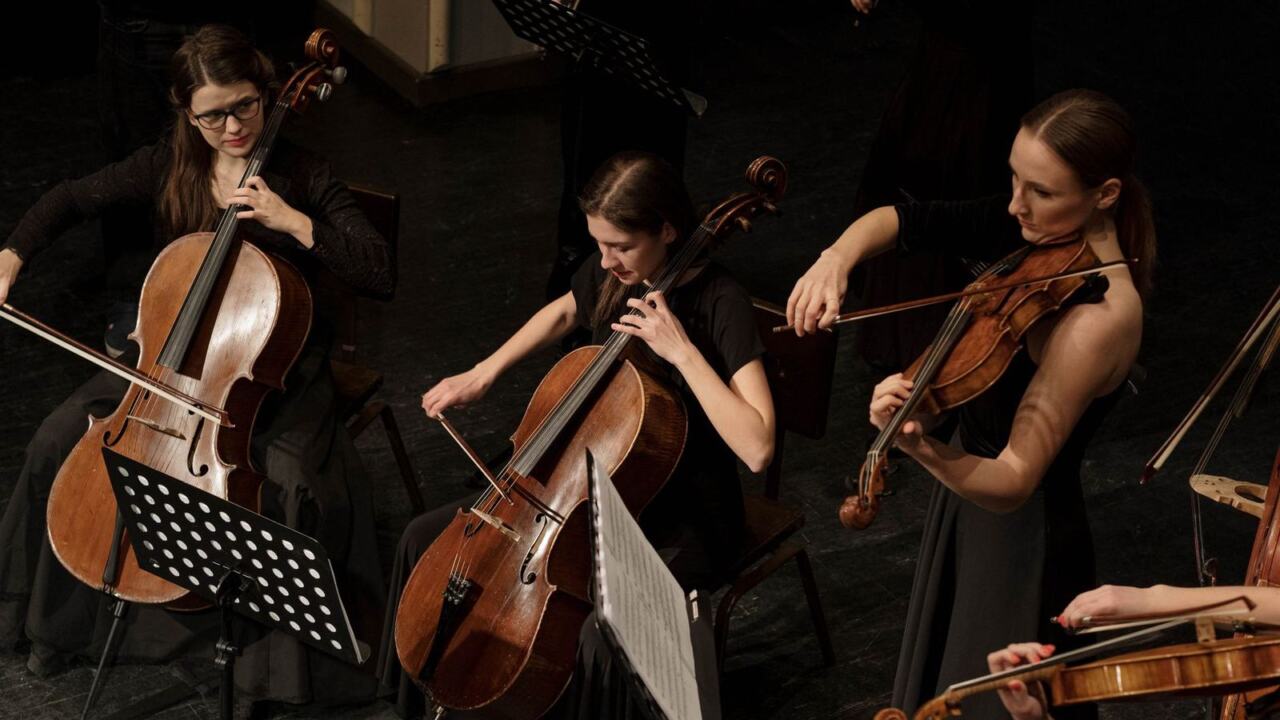
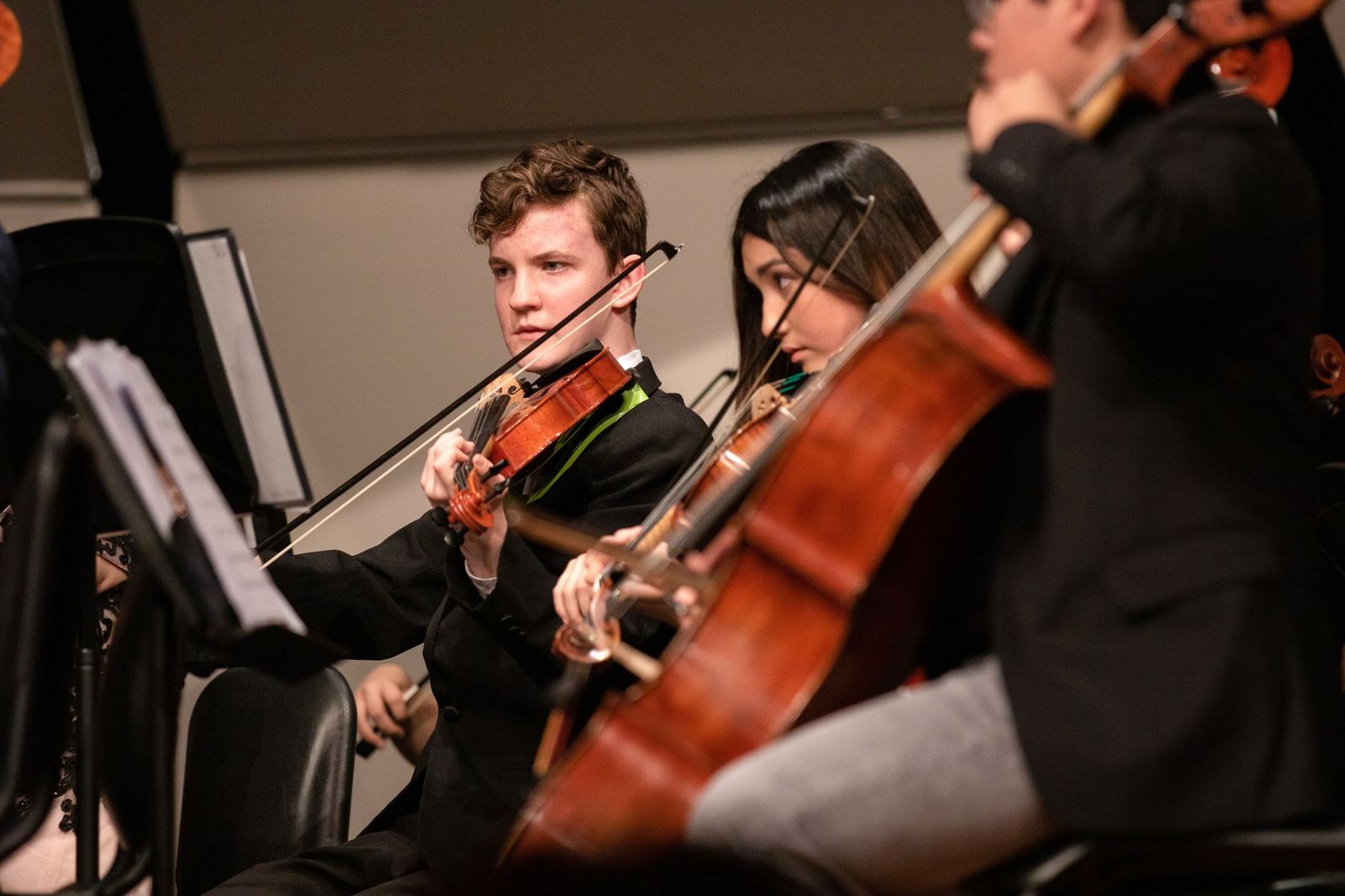
Wondering what is a string quartet, and why concert programmes treat it so seriously? It is four string players, or a piece written for them: two violins, a viola and a cello, playing as equals.
This guide sits within our wider look at classical music periods, where the quartet grew up.
| Item | Key fact |
|---|---|
| Instruments | Two violins, one viola and one cello |
| Standard number of movements | Four |
| Usual form of the opening movement | Sonata form, Allegro |
| Composer who shaped the genre | Joseph Haydn, with works from the 1750s |
| Haydn set called the first major peak | The Op.20 quartets |
These figures come from a university-level course text hosted by Lumen Learning. Textbook summaries can change or differ from other references, so check the source before you rely on them.
The four instruments and what each does
The string quartet uses the same four instruments every time. The course text says quartets “are always written for the same four instruments: two violins, one viola, and one cello.”
That fixed line-up is part of the appeal. Nothing is added to hide a weak idea, so every part is exposed.
- First violin: usually carries the highest line and often the main tune.
- Second violin: fills the middle of the harmony and often trades themes with the first.
- Viola: the darker inner voice that joins the harmony to the bass.
- Cello: the bass foundation, though it also takes melodies of its own.
The word “quartet” can mean the group as well as the music. The same four people may be called a quartet whether they are playing Haydn or something modern.
The same text describes a quartet as “a musical ensemble of four string players-two violin players, a viola player and a cellist-or a piece written to be performed by such a group.” Context tells you which meaning is intended.
How a string quartet is built
The standard plan has four movements. The course text describes the first movement as being in “Sonata form, Allegro, in the tonic key”, followed by a slow movement.
The third movement is a minuet and trio. The finale is often in rondo form or sonata rondo form.
- A fast, weighty opening movement in sonata form.
- A slow, songlike movement.
- A minuet and trio, with a dance character.
- A lively finale, often a rondo.
This layout matches the symphony of the same era, but at chamber scale. You hear the same musical argument with only four voices.
Not every quartet follows the plan. The text says “substantial modifications to the typical structure were already achieved in Beethoven’s later quartets”, and that composers of the twentieth century increasingly abandoned the structure.
Haydn and the birth of the genre
The course text says the quartet “was developed into its current form by the Austrian composer Joseph Haydn, with his works in the 1750s establishing the genre.” It also notes that “as with the Symphony, Haydn plays a critical role in elevating the genre to the position of prominence it enjoyed in the 18th century and beyond.”
The early pieces were written to suit four amateur players. In the text’s words, “Fürnberg requested Haydn to compose something that could be performed by these four amateurs.”
Later sets grew more ambitious. The text describes a “democratic and conversational interplay of parts, close-knit thematic development, and skilful though often self-effacing use of counterpoint.”
It calls the Op.20 set “the first major peak in the history of the string quartet.” A way to hear this is to follow how the lower parts stop merely accompanying and start answering the violins.
Mozart, Beethoven, Schubert and after
Haydn did not work alone for long. The source says “Mozart, Beethoven and Schubert following Haydn” each wrote a number of quartets. If you like Mozart’s other music, our mozart requiem story shows another side of the composer.
Beethoven is a special case. The text says he “is credited with developing the genre in an experimental and dynamic fashion, especially in his later series of quartets written in the 1820s up until his death.”
Those late works made a deep impression on other composers. The text records that “Schubert’s last musical wish was to hear Beethoven’s Op.131 in C♯ minor quartet, which he did on 14 November 1828, just five days before his death.”
Later in the 19th century, the pace of quartet writing slackened. The text links this to a movement away from classical forms by composers such as Liszt, Wagner and Richard Strauss.
The genre returned in the 20th century. The text names the Second Viennese School, Bartók, Shostakovich and Elliot Carter as producing highly regarded examples.
To place these composers in order, see the famous classical composers timeline.
Related groups and how to listen
Many other chamber groups are built from the quartet. The text explains that “the piano quintet is a string quartet with an added piano” and that “the clarinet quintet is a string quartet with an added clarinet, such as those by Mozart and Brahms.”
The string trio, by contrast, “has one violin, a viola, and a cello.” Knowing these relatives helps when you read a concert listing.
The text says that “ever since Haydn’s day the string quartet has been considered a prestigious form and represents one of the true tests of the composer’s art.” Four equal voices leave little room to hide.
For listeners, that same clarity makes quartets a good way into classical music. You can follow each line and hear how the players answer each other.
- Start with a Haydn quartet to hear the form at its source.
- Move on to Mozart or Schubert, who followed Haydn in writing quartets.
- Try Beethoven’s later quartets, which the text credits with developing the genre in an experimental and dynamic fashion.
- Try Bartók or Shostakovich to hear the genre in the twentieth century.
On each listening, pick one instrument and follow it from start to finish. Then switch to another, and notice how the same music feels different.
Frequently asked questions
What instruments are in a string quartet?
Show answer
Two violins, one viola and one cello. The course text says these are the same four instruments every time.
Who invented the string quartet?
Show answer
Joseph Haydn is credited with developing it into its current form, with works from the 1750s establishing the genre.
How many movements does a string quartet have?
Show answer
The standard structure has four movements, with a sonata-form opening and often a rondo finale.
Can “string quartet” mean the players and not the piece?
Show answer
Yes. The term can mean four string players or a piece written for such a group.