Wondering what the first opera ever written actually was? Most historians point to Jacopo Peri’s Dafne, first performed in Florence in 1598, though almost none of its music survives.
This guide is a spoke of our wider history of opera overview.
| Item | Key fact |
|---|---|
| Earliest known opera | Dafne, by Jacopo Peri, 1598 (Carnival) |
| Librettist of Dafne | Ottavio Rinuccini |
| Surviving libretto of Dafne | 455 lines of verse |
| Earliest surviving opera | Peri’s Euridice, performed in 1600 |
| Earliest opera still regularly performed | Monteverdi’s L’Orfeo, 1607 |
Details come from Wikipedia’s Dafne article and its L’Orfeo article. Scholarly dating can shift, so check those pages before you rely on the figures.
So, which work counts as the first opera?
The usual answer is Dafne. Wikipedia calls it the earliest known work that, by modern standards, could be considered an opera.
The word “known” matters: earlier works may have existed that nobody can now identify.
The question has no single clean answer, because it depends on what you count. “First written”, “first surviving” and “first still performed” point to three different works.
Dafne: Florence, Peri and Rinuccini
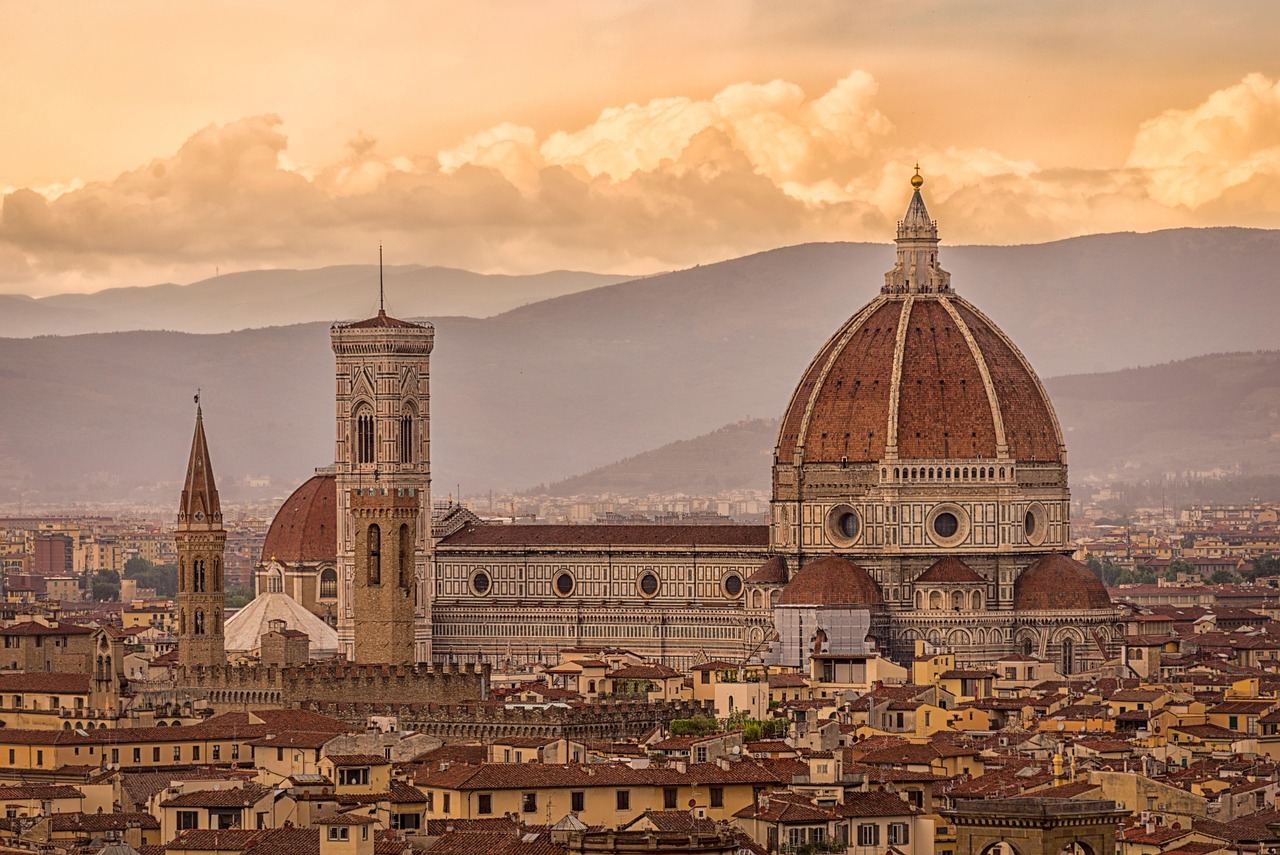
Dafne was set to a libretto by Ottavio Rinuccini, with music by Jacopo Peri. It was an attempt to revive ancient Greek drama.
The story is the myth of Daphne, the nymph who is pursued by Apollo. The first performance took place during Carnival of 1598 at the Palazzo Corsi.
You will sometimes see 1597 given instead. That is the same Carnival season under the old-style calendar, so the two dates do not conflict.
Later performances followed in 1599. Exact dates are still debated by scholars.
The story it told
The plot follows the myth of Apollo and Daphne. Cupid, to get back at Apollo, shoots him so that he falls in love with Daphne.
To escape him, Daphne turns into a laurel tree. Apollo then makes a crown of the laurel, which becomes a symbol of poetry, music and freedom.
The sound of the first opera
Dafne was scored for a much smaller ensemble than Monteverdi’s slightly later operas: a harpsichord, a lute, a viol, a chitarrone and a triple flute. Peri aimed to replicate the flow and musicality of speech in his writing.
That goal is the heart of early opera. The composers were not trying to write a string of showpiece songs, but to let words carry the drama through music that followed natural speech.
The Florentine circle behind it
The opera was written for an elite circle of humanists in Florence, the Florentine Camerata, between 1594 and 1597. Its first performance took place at the Palazzo Corsi.
Contemporaries such as Emilio de’ Cavalieri and Giulio Caccini pursued different but similar compositional goals. Research does not support the old idea that Caccini helped write the music of Dafne.
Why you cannot hear Dafne today
Most of Peri’s music has been lost, even though the work was popular and famous in Europe at the time. What survives is the libretto, a 455-line verse text that was published.
That is why Dafne is more a landmark of history than a repertoire piece. Singers and scholars can read the words, but they cannot stage Peri’s original score.
It also explains why the next work matters so much. The Medici family liked Dafne enough to let Peri’s following opera, Euridice, be part of royal wedding celebrations.
Euridice and the first surviving opera
Euridice was performed in 1600 for the wedding of Maria de’ Medici and King Henry IV of France. Wikipedia describes Peri’s Euridice as the earliest surviving opera.
Giulio Caccini wrote his own, identically titled Euridice. Both versions survive complete, along with Emilio de’ Cavalieri’s Rappresentatione di Anima, et di Corpo.
So if your question is “what is the oldest opera I can actually study as music?”, the answer is Euridice, not Dafne.
L’Orfeo: the first opera still on stage
Claudio Monteverdi’s L’Orfeo was written in 1607 for a court performance during the annual Carnival at Mantua. The libretto was by Alessandro Striggio.
On 6 October 1600, Duke Vincenzo of Mantua was visiting Florence for the wedding of Maria de’ Medici to King Henry IV of France. The Duke quickly recognised the novelty of the form and its potential to bring prestige to its sponsors.
L’Orfeo is the earliest opera that is still regularly performed.
In his published score, Monteverdi lists around 41 instruments, with distinct groups used to depict particular scenes and characters. The work is not orchestrated as such: in the Renaissance tradition, instrumentalists followed the composer’s general instructions but had considerable freedom to improvise.
Monteverdi blended the entire stock of newest and older possibilities into a unity that was indeed new.
If you go to hear it, different singers carry different roles, and our guide to opera voice types explains the categories. A later work such as the la traviata story shows where the form went next.
A quick way to remember the order
The three titles are linked by people as well as dates. Peri and Rinuccini made Dafne, Peri’s Euridice followed it in Florence, and Duke Vincenzo of Mantua, in Florence in 1600, recognised the novelty of the new form; L’Orfeo, by Monteverdi and Striggio, was written for Mantua in 1607.
Seen this way, the Florentine experiment and the Mantuan court production are two stages of one story. The first stage proved the idea, the second showed what a gifted composer could do with it.
That chain explains why historians speak of a single early tradition, not three unrelated experiments. Each work built on the one before it, and each used the same basic idea of drama carried by music.
- Dafne (1598): the first known opera, with the music mostly lost.
- Euridice (1600): the earliest surviving opera.
- L’Orfeo (1607): the earliest opera still regularly performed.
Use this list as a rule of thumb, not a verdict. Scholars still debate performance dates for Dafne, and the surviving evidence is thin, so any “first” is a statement about what we can currently document.
Which one you call “first” depends on whether you value invention, survival or the living repertoire.
Frequently asked questions
What was the first opera ever written?
Show answer
Peri’s Dafne, first performed in 1598 at the Palazzo Corsi in Florence, is generally recognised as the first work in the opera genre.
Is the music of Dafne still available?
Show answer
Only in fragments. Most of Peri’s music has been lost, although the verse libretto was published and survives.
Which is the oldest opera still performed?
Show answer
Monteverdi’s L’Orfeo from 1607 is the earliest opera that is still regularly performed.
What is Dafne about?
Show answer
It retells the myth of Apollo and Daphne, in which Daphne escapes by turning into a laurel tree. Apollo then makes a crown of the laurel.
Why do some sources say 1597?
Show answer
Dafne was first performed during Carnival of 1598, which is 1597 in the old-style calendar.