Wondering where to start with antique music collectibles? Pick one category you love, such as records, music boxes, violins or opera glasses, and learn its condition rules first. Value follows scarcity, condition and story.
| Item | Key fact |
|---|---|
| Comb-and-cylinder musical box registered in Geneva | 1796 |
| Cylinder musical box becomes an instrument in its own right | From about 1815 |
| Berliner’s “Gramophone” patent effective | 8 November 1887 |
| Playing speed of shellac records of the era | 78 revolutions per minute |
These figures come from the Museum Speelklok and the German Patent and Trade Mark Office. Dates and numbers can change as research advances, so check the source before you rely on them.
What counts as antique music collectibles?
The phrase covers any object tied to making, hearing or enjoying music that has survived long enough to become historically interesting. That includes machines that played sound, the discs and cylinders they played, instruments, printed music and the souvenirs of an evening at the opera.
For readers of a site about historic opera and classical music, the most natural entry points are the objects that put you in the room with a performance. A singer’s recording, a programme, a poster or a pair of opera glasses all carry traces of a real night out. The story behind an object is often what separates a charming curiosity from a piece worth hunting for.
Dealers and auction houses usually treat the following as the main families:
- Sound technology: phonographs, gramophones, horns, needles and the records themselves.
- Mechanical music: music boxes, musical watches, automata and barrel organs.
- Instruments: violins, flutes, guitars and other items with a maker’s name and a documented history.
- Theatre accessories: opera glasses, fans, programmes and ticket stubs.
- Paper: sheet music, librettos, posters, photographs and autographs.
Each family has its own vocabulary, its own fakes and its own habits of wear. A sensible beginner chooses one and ignores the rest for a while. If you want the wider artistic background first, a short read on the history of opera helps you see why certain names and dates matter so much to collectors.
Gramophones, phonographs and records
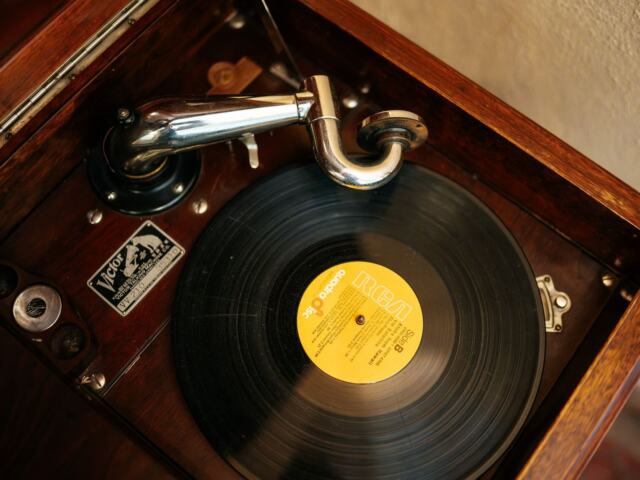
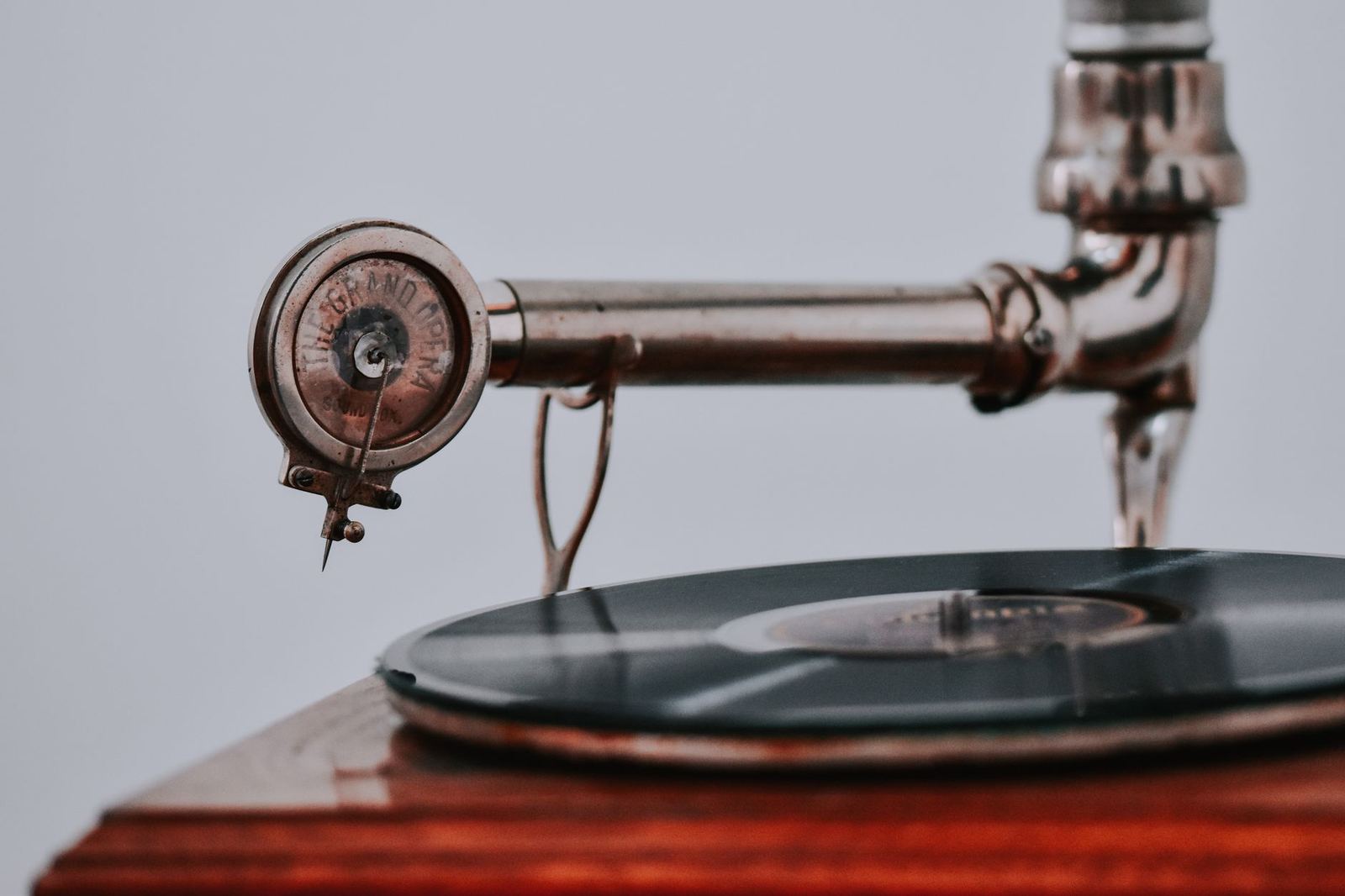
Recorded sound is probably the richest field for opera lovers, because it preserves voices that no living listener ever heard on stage. The machines have a story of their own. The antique gramophone history page follows how the horn machines developed, so this section only sets out the basics.
Thomas Edison’s early phonograph used a cylinder and recorded by cutting into the surface. Emile Berliner’s approach used a flat disc. The German Patent and Trade Mark Office notes that his patents featured a helical sound groove with V-shaped “side writing” in place of Edison’s “depth writing”, and that the invention became known by its American patent title, “Gramophone”, effective 8 November 1887.
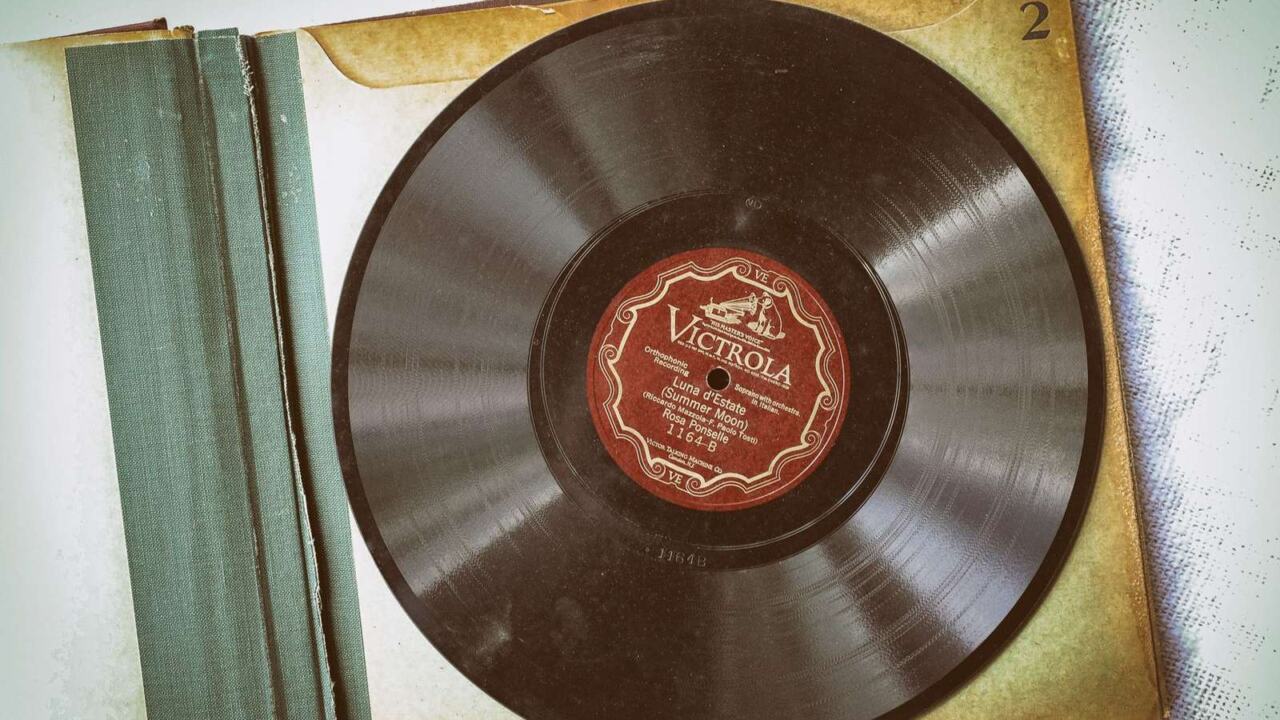
The disc itself changed materials as the business grew. According to the same office, Berliner replaced the initially used glass discs “first with zinc, then hard rubber, and finally with a mixture with shellac”. Shellac records of that time were played at 78 revolutions per minute, which is why collectors still call them 78s.
Why 78s attract opera collectors
Early opera singers made some of the most prized discs of the acoustic era. The Library of Congress’s National Jukebox, launched in 2011, lets you stream some 10,000 sides, and NPR’s account of the launch says the pre-1925 records from the Victor Talking Machine Company were all made available. The same report counts more than 175 recordings of Enrico Caruso, including a 1907 recording of the duet “O soave fanciulla” from Puccini’s La bohème.
That free listening is useful before you buy. It tells you which performances exist, which label issued them and what a clean pressing should sound like. NPR also cautions that gaps remain: Caruso’s earliest recordings, made in Milan in 1902, are missing, as are Nellie Melba’s from 1904.
For the money side, the page on 78 rpm records worth explains how condition, label and pressing drive prices. The page on caruso records collecting looks at one singer’s discography in detail.
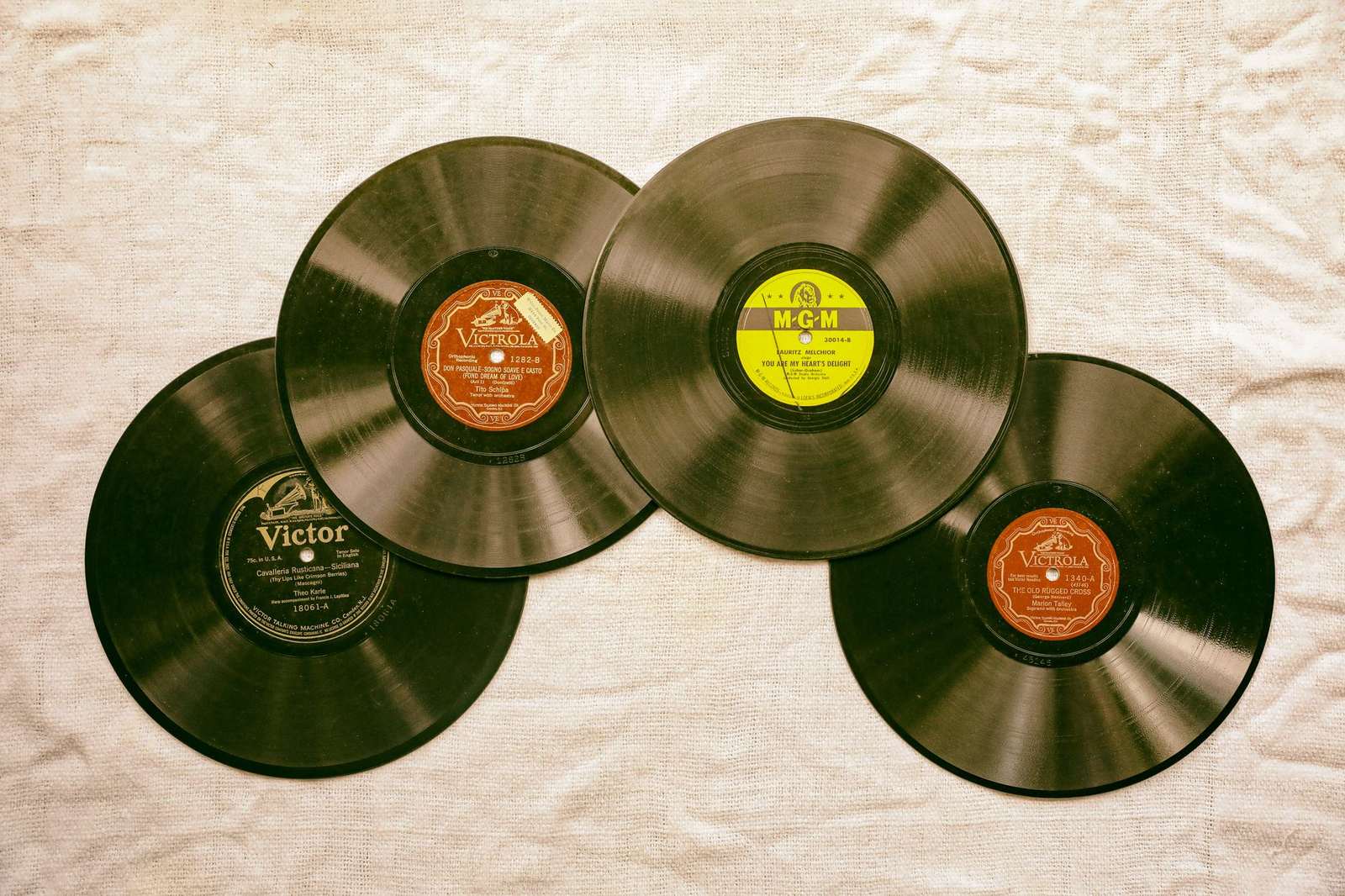
Cylinders, discs and how to care for them
Cylinders and discs are fragile in different ways. Shellac discs break if dropped and warp with heat, so they should stand upright in sleeves and never lean in a stack. Wax cylinders can crack, grow mould or be damaged by careless handling, and they need dry, stable storage.
Check the playing surface in raking light. Deep scratches, cracks, chips at the edge and worn grooves all reduce both sound and price. A record that looks glossy can still be worn out, so a listening test, when the seller permits one, tells you more than a photograph.
Labels also matter. The printed label tells you the artist, the work, and the catalogue number. Collectors compare these details against discographies, and the free listening described above helps you confirm that what you hold is what the seller says it is.
Music boxes and mechanical music
Mechanical music is the other great family of sound collectibles. It is quieter than the gramophone story, but it came first. The Museum Speelklok says the history of the musical box starts in 1796, when Antoine Favre of Geneva had his invention of the so-called “carillon without hammers and bells” registered.
The principle is simple and beautiful. As the museum puts it, the earliest musical toothed combs were played by a cylinder with the pins on it plucking the teeth directly. The comb replaced the hammers and bells of older musical clocks.
Early mechanisms did not always sit in a box of their own. The museum says that cylinder mechanisms were first mounted in objects such as clocks, watches, snuffboxes and sewing boxes. From about 1815, the cylinder musical box became more and more of a musical instrument in its own right.
What to look at on a music box
A music box can look charming and still be a poor buy. Collectors usually check a short list of points before anything else:
- The comb: look for broken or replaced teeth, which change both sound and value.
- The cylinder: bent or missing pins leave gaps in the tune.
- The tune sheet: a surviving original list of melodies helps with dating and with confirming the box is complete.
- The case: veneer lifting, cracks and later repairs matter.
- The mechanism running: it should play steadily through the whole tune without stopping or racing.
If you are trying to put a name and a rough date to a box, the guide to antique music box identification walks through makers’ marks and mechanism types.
Music boxes also reward patience and a little maintenance knowledge. A box that plays slowly may need cleaning and oil from a competent restorer, not a home experiment. According to the Museum Speelklok, clocks, watches, snuffboxes and sewing boxes were among the first objects to carry cylinder mechanisms.
The appeal is partly the sound and partly the engineering. Many boxes were souvenirs of travel and of evenings at home, and their tunes often include operatic melodies. That connection makes them a natural neighbour to a record collection.
Instruments, opera glasses and paper
Instruments are the most expensive part of the hobby, and violins sit at the very top. The best known example is the Lady Blunt, a violin made in 1721 by Antonio Stradivari. Wikipedia’s entry on it records that it sold at Sotheby’s in 1971 for the then-record amount of £84,000 (US$200,000), and that an online Tarisio auction in 2011 raised almost £10 million (US$15.9 million).
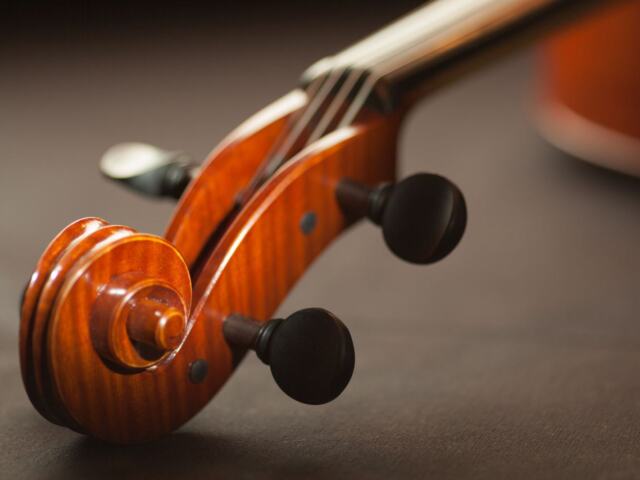
Such sums are far from the experience of most collectors. They do show how much a documented maker, a known history and exceptional preservation can add. A violin of that kind is not a casual purchase, and any older violin with a famous label is worth careful study before you assume anything. Start with the guide on how to identify an old violin, because a label alone proves very little.
Opera glasses and theatre accessories
Opera glasses are small, wearable pieces of theatre history. Many were made in brass, mother-of-pearl, enamel or ivory-like materials, and they came in pairs of small lenses meant for a box seat. Prices depend on the maker, the decoration, the clarity of the optics and whether the original case survives. The page on antique opera glasses value covers what raises or lowers the price.
Be careful with materials. Ivory trade rules differ by country and can restrict buying, selling or moving items across borders, so check your local law before you buy anything described as ivory.
Sheet music, libretti and posters
Paper collectibles are inexpensive to begin with, and they take little space. A first edition score, a signed programme or a composer’s engraved vocal score can be a lovely entry into the subject. Condition is critical: tears, foxing, brittle paper and damp stains reduce value quickly.
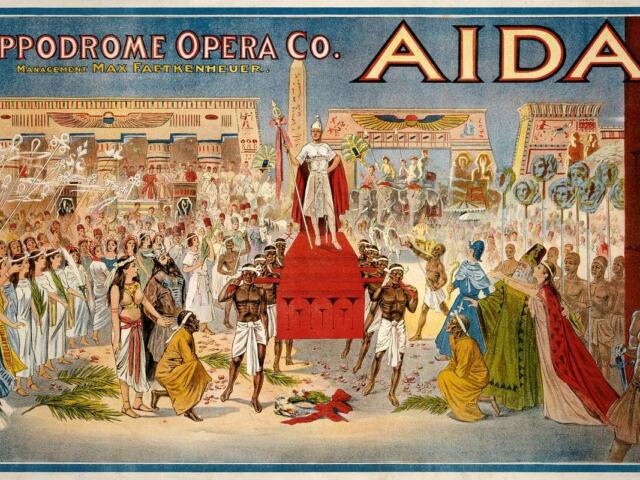
For printed music, the page on antique sheet music value explains how editions, covers and signatures change prices. Posters are a different market, valued for their artists and their design. The page on vintage opera posters collecting describes what to look for.
How to judge condition, provenance and value
Three questions guide almost every purchase: what is it, what condition is it in, and can its history be shown? Everything else, including price, follows from those answers. Rarity matters, but a rare item in poor condition can be worth less than a common one in excellent condition.
Condition deserves the most honesty. Learn the standard terms for your category, and ask a seller to describe flaws in plain words and photographs. Cleaning, polishing and repair can lower value if done badly, so avoid trying to improve an item before you understand it.
Provenance means the documented chain of ownership. A receipt, a family letter, an auction catalogue entry or an old photograph showing the object can all help. The Lady Blunt example above shows how a documented sequence of owners and sales is part of an instrument’s identity.
Reproductions, fakes and common pitfalls
Popular categories attract reproductions. Reproduction posters, modern music boxes in old-style cases and gramophones assembled from mismatched parts all circulate widely, and some are sold honestly as decorative pieces. The problem begins when they are described as original.
Look for signs that the parts belong together. Screws, finishes and wear should age consistently, and a horn, a motor and a case from different makers deserve questions. On paper, check for modern printing patterns, unnaturally even yellowing and fresh-looking edges.
Prefer sellers who explain what they know and admit what they do not. A description such as “probably later replacement” is a good sign, because it suggests the seller has looked closely. A long list of superlatives with no photographs of flaws is a warning.
Selling, insuring and recording what you own
Keep a simple inventory with a photograph, a description, the purchase price and the date for each item. It helps with insurance, with later sales and with your own memory.
When you sell, expect auction houses and dealers to charge fees, and expect buyers to pay for condition and documentation. A clear photograph, an honest description and any paperwork you hold will all improve the result. Never rely on a single price you saw online.
Reading the context of a period
Knowing the musical period helps you date and judge items. A score from the Baroque era, a Romantic opera programme and a record from the early days of recording belong to very different worlds. A short overview of classical music periods gives you the landmarks, so that a label or a title page starts to tell you roughly when something belongs.
A simple checklist before you buy
- Ask for clear photographs of every side, including any marks and damage.
- Compare with similar items sold recently, not only with asking prices.
- Find out whether the item is complete and original, or assembled from parts.
- Ask about returns, and keep every receipt and description.
- Set a budget before an auction starts, and include fees and shipping.
Reference books and museum catalogues are worth the effort. They show correct examples, record maker’s marks and explain terms that sellers often use loosely. Reading a few before you spend money is the cheapest way to avoid an expensive mistake.
Be patient with prices as well. A bargain that appears too good usually has a flaw you have not yet noticed. Watching several sales before you bid teaches you what ordinary condition looks like, so that exceptional items stand out when they appear.
Storing, caring for and starting your collection
Good care preserves value and pleasure alike. Keep paper away from sunlight and damp, store records upright and away from heat, and keep mechanical items in a stable, dry room. Handle everything with clean, dry hands, and avoid strong cleaners on any surface you do not understand.
Start small and learn by handling things. Visit museums, listen to archive recordings, read catalogues and talk to specialist dealers in your chosen area. This site is independent and educational, so it cannot value your items or sell anything, and a specialist appraiser is the right person for a valuation.
A good first collection often has a theme that is personal rather than expensive. You might collect records of one singer, music boxes from one maker, or posters from one opera house. A theme gives you rules for saying no, and it makes your collection more interesting to look at, share and eventually pass on.
Frequently asked questions
What is the best antique music collectible for a beginner?
Show answer
Paper items and common records are the cheapest way to learn. They let you practise judging condition and spotting editions before you spend on instruments or mechanical items.
Are old records playable on a modern turntable?
Show answer
Shellac records were played at 78 revolutions per minute, according to the German Patent and Trade Mark Office, so you need a turntable with that speed and a suitable stylus. Using the wrong stylus can damage the groove, so ask a specialist before you play a valuable disc.
Where can I hear historic opera recordings before buying?
Show answer
The Library of Congress National Jukebox streams some 10,000 sides, per NPR’s report on its launch. It includes Victor records of Caruso, though some early recordings are missing.
Does a famous maker’s label guarantee value?
Show answer
No. Labels can be copied, moved or applied to later instruments. Condition, construction and documented history matter far more than a name alone.
Should I restore an item before selling it?
Show answer
Usually not without advice. Poor cleaning or repair can lower value, so consult a specialist for your category first.