Found a violin in an attic and wondering how to identify an old violin? Start with the label, wood and construction, but treat the label as a clue, never proof.
This guide is part of our look at antique music collectibles.
| Item | Value |
|---|---|
| Usual label position | On the bottom, below the f-hole on the bass bar side |
| Typical label size | Lengths up to about 10 cm, heights up to about 5 cm |
| Weight of a label as evidence | Not proof by itself |
| Rings measured on a spruce top in one case study | 168 (bass side) and 155 (treble side) |
| Earliest possible felling year in that case study | 1823 |
Figures come from Corilon’s guide to violin labels and Historic Jamestowne’s tree-ring study of an antique violin. They can change or differ between instruments, so check the sources before you rely on them.
How to identify an old violin: document it first
Before you clean, tune or repair anything, photograph the violin as found. One appraisal guide advises you to photograph the full front and back, internal label, scroll, pegbox, ribs, f-holes, bridge, tailpiece, bow, frog, and case, as set out on Appraisily’s identification checklist.
Resist the urge to play it hard or tighten the strings to test the sound. An old instrument may have an unstable bridge, loose seams or a weak neck joint, and its tone says little about who made it.
Write down the body length, the overall length and any visible damage or repairs. Those notes help a specialist far more than a single photo of a label.
- Front, back and sides, in even daylight
- The scroll from the front, side and back
- Both f-holes and the inside label
- Any stamps, branded marks or handwriting
- The case and bow, which can carry their own clues
Reading the label inside the violin
Look through the f-hole with a torch. A traditional label gives the maker’s name, a place and a year, often with a formula such as “fecit” (made), though most labels give only the name, place and year, according to Corilon’s label overview.
The usual spot is on the bottom below the f-hole on the bass bar side. A label can be cut from paper of various grades and is usually printed.
Why a famous name proves little
A label is not proof by itself, as the Appraisily guide puts it, so a famous name inside a violin should be treated as a clue to check.
Most labels give only the name, place and year, so the wording alone rarely settles who made the instrument, and it is worth recording exactly what each slip says.
Facsimiles and repair labels
Even a correct facsimile can sit in a copy. The Jamestowne study found a label that was a correct facsimile of an authentic Carlo Bergonzi label, and the study reported that no definite identification was achieved.
Some violins also carry repair labels beside the maker’s label. These record work done later, so read every slip inside before drawing conclusions.
Corilon notes that, apart from clumsy forgeries or deliberately recognisable facsimiles, it is usually impossible for laymen to tell whether a slip is authentic. Expect to need an expert for that step.
What the wood and construction tell you
Most violins have a spruce top and a maple back and ribs. That combination is common across many centuries of violin making, so the species alone will not date an instrument, but the details of the work can.
Look at the following, in roughly this order:
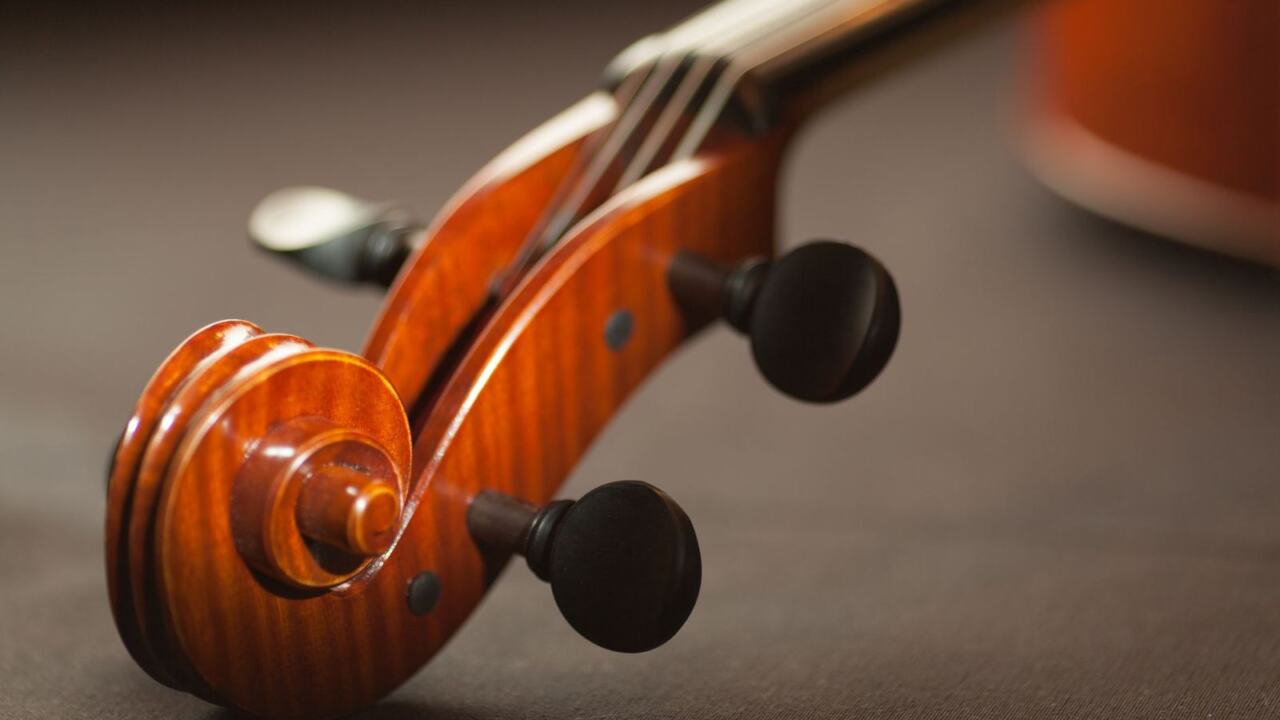
- Scroll and pegbox: carving quality, symmetry and whether the scroll looks original to the body.
- F-holes: note the shape and cut, and photograph them for a specialist.
- Purfling: the inlaid line around the edge should be cleanly set, not drawn on in ink.
- Varnish: look for natural wear where hands touch, and be wary of uniform artificial “antiquing”.
- Repairs: cracks, patches, a replaced neck or a re-graduated top all change the story and the value.
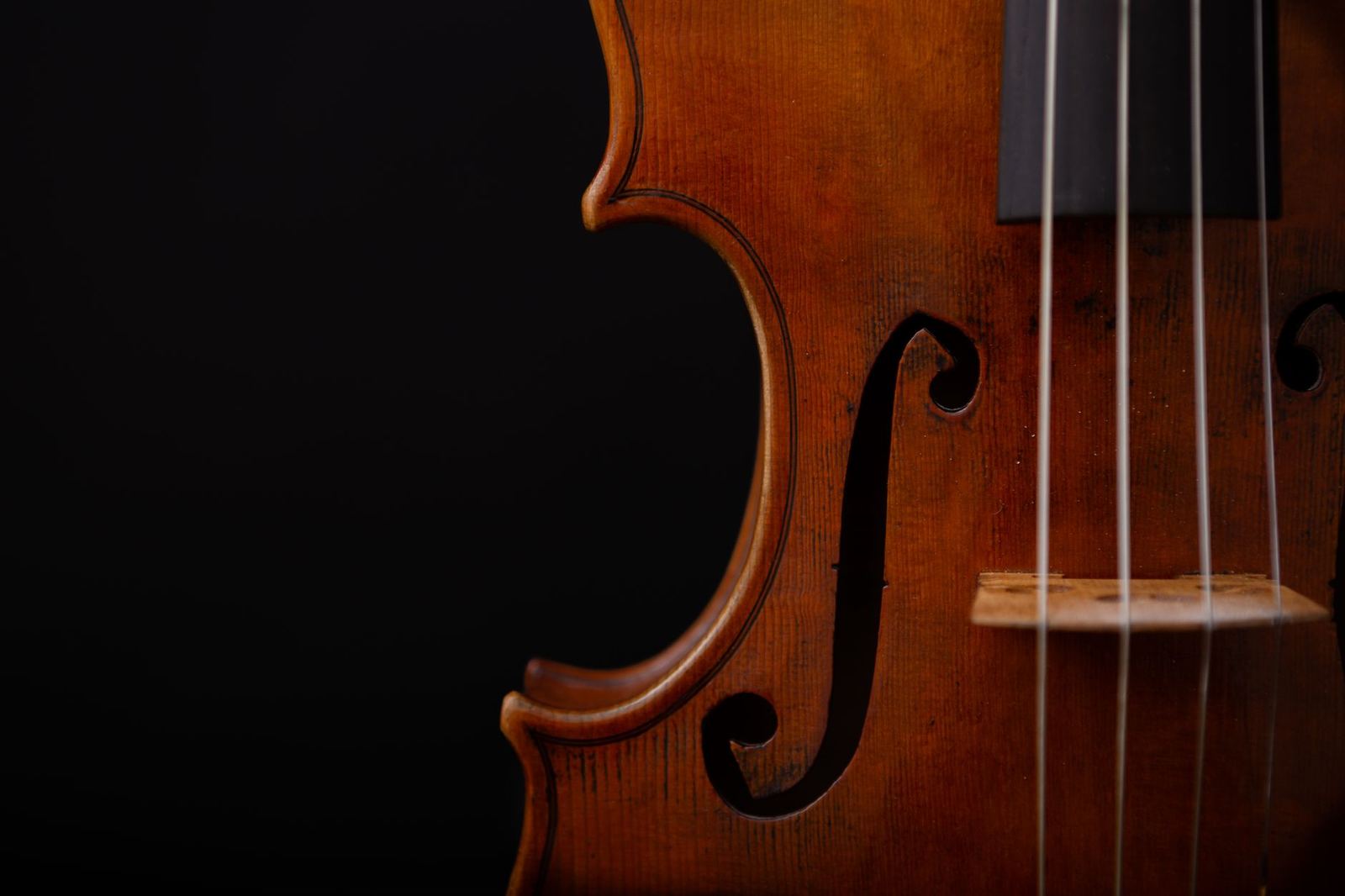
Shine a torch through the f-holes to see the inner surfaces, linings and corner blocks. Photograph what you see there too, since the appraisal checklist also asks for the ribs and internal label.
Judging hand work from machine work is a specialist call, so record the tool marks and outline you can see and let a dealer or appraiser interpret them.
Tree rings and scientific dating
Dendrochronology is the study of the size and spacing of tree rings to identify the potential date and origin of the tree. On violins it is applied to the spruce top, not the maple.
In the Jamestowne case, 168 rings were measured on the bass side and 155 on the treble side. Because the spring growth of the following year was just visible, one year was added, giving an earliest possible felling year of 1823.
That date is a floor, not a birthday. A top can be cut years after a tree is felled, so the result narrows the possibilities and never names a maker. The same study reported that no definite identification was achieved.
Sharp, high-resolution images are required, and instruments with very tight rings may need better equipment than an ordinary camera. This is specialist work, usually arranged through a violin shop or research institution.
Next steps once you have a theory
Compare your notes with published label references and with museum catalogues, then ask a qualified violin dealer or appraiser to examine the instrument in person. Never rely on a label match alone.
If the violin comes with sheets of music or other family papers, they may help trace its history; our notes on antique sheet music value explain how to assess printed items. Collectors of other mechanical or musical objects may also like our guide to antique music box identification.
Be realistic about the outcome. A definite identification is not always possible, as the Jamestowne study showed. An honest, cautious attribution backed by documentation is a good result.
Write down what you learn as a short provenance file: who owned the violin, where it was kept, and any stories attached to it. A buyer or appraiser will want that history alongside the physical evidence, and family memories fade quickly if they are not recorded.
Finally, compare more than one opinion. Different specialists may weigh the label, the varnish and the carving differently, and a consistent view from several of them is far more reliable than a single confident verdict.
Keep the instrument out of heat, damp and direct sun while you investigate. Do not re-varnish, peel out labels or loosen seams, because each change can erase evidence.
Frequently asked questions
Does a Stradivarius label mean my violin is real?
Show answer
Not by itself. A label is not proof by itself, so have the instrument examined by a specialist.
Can I authenticate a label myself?
Show answer
Usually not. Corilon notes that apart from clumsy forgeries or deliberately recognisable facsimiles, laymen can rarely tell whether a label is authentic.
Can tree rings name the maker?
Show answer
No. They give an earliest possible felling date for the wood, and in the Jamestowne study no definite identification was achieved.
Should I clean the violin before showing it to an expert?
Show answer
No. Photograph it as found, since cleaning or repair can remove clues.