Found an old music box and not sure what it is? Antique music box identification starts with one question: does it play from a pinned cylinder or a metal disc? Then check the serial number.
This guide is part of our look at antique music collectibles.
| Item | Key fact |
|---|---|
| Regina serial number location | Small raised area on the bedplate, or the circular platform on the centre spindle in some earlier boxes |
| Regina shipping records | Kept by MBSI from the Rahway, NJ factory |
| Numbers on cylinder boxes | Serial number and gamme number |
| Gamme number often scratched on | Lead weight soldered to the lowest bass tooth of the comb |
| Published tune sheet book | Tune Sheets Nos 1 to 514 online |
These details come from MBSI’s Regina certificates page and the Musical Box Society of Great Britain’s tune sheet page. Services and figures can change, so check the source before you rely on them.
Start with the type: cylinder or disc?
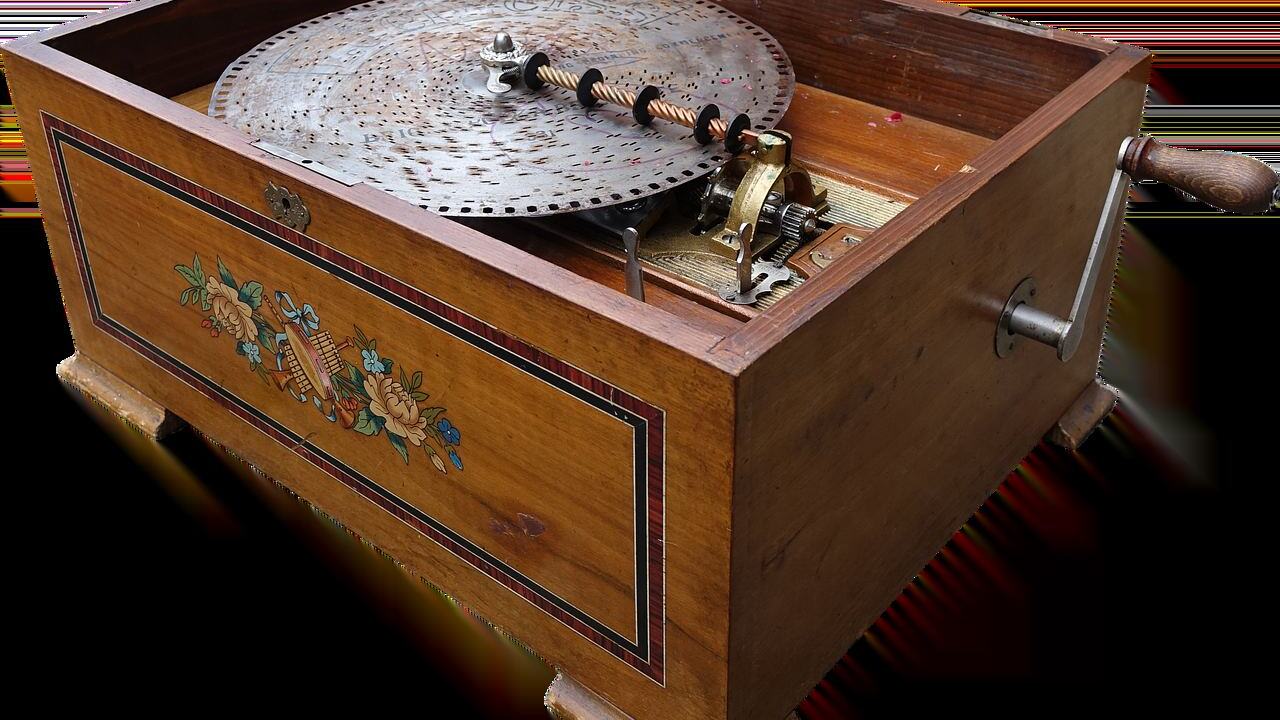
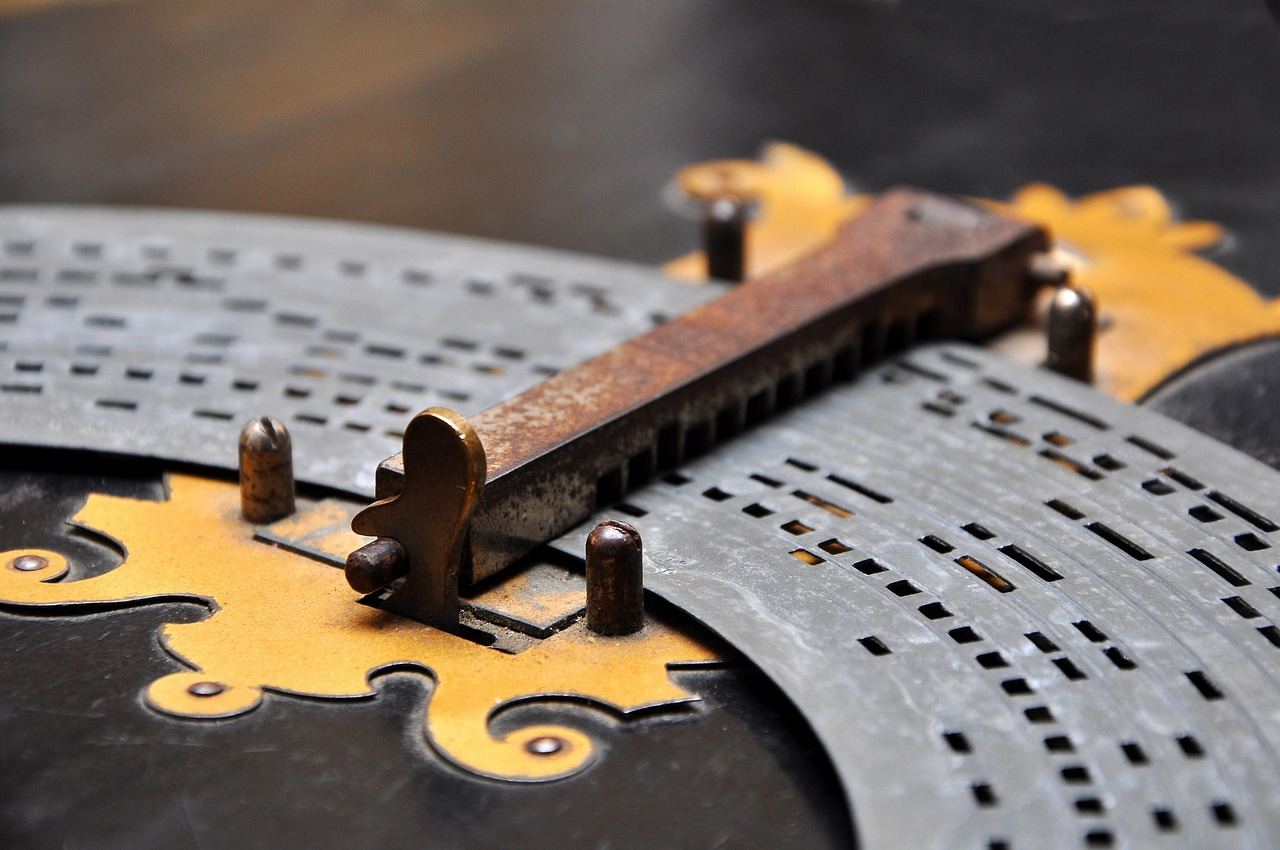
Lift the lid and look at how the music is stored. A cylinder box has a brass drum covered in tiny pins that pluck a steel comb. A disc box reads a flat metal disc punched with projections.
This one distinction narrows the search a great deal. Cylinder boxes are identified mainly by maker, serial number and tune sheet. Disc boxes are identified mainly by the maker’s name on the lid or movement, and by the disc size they accept.
Take photographs before you touch anything. Include the whole movement, the comb, the bedplate, the inside of the lid and any paper label.
Antique music box identification: names, labels and marks
Makers and sellers often put their name in several places. Check each of these in turn:
- The paper tune sheet or label glued inside the lid.
- Transfers, gilt lettering or a nameplate on the lid or the front of the case.
- Stamps on the bedplate, the metal plate that carries the comb and the cylinder.
- Scratched numbers on the comb, the cylinder or other parts of the movement.
A name can mislead you. Some names belong to the retailer or agent, not the factory that built the movement. The Musical Box Society of Great Britain says the provenance and value of a cylinder box can be improved if the maker can be identified, or if an appropriate tune sheet is found when one is missing.
Serial numbers and gamme numbers
Cylinder boxes usually carry a serial number and a gamme number, and they are not the same thing.The Mechanical Music Digest explains that the pair are the serial number and the gamme number, and both were usually written by hand on the tune sheet, preceded by S and G. Its source is a 2020 Mechanical Music Digest post on gamme numbers.
The serial number is usually stamped on the bedplate, though both numbers were often scratched on other parts. The gamme number is commonly found on the lead weight soldered to the lowest bass tooth of the comb.
The numbers do different jobs:
- The serial number identifies the individual movement.
- Many movements were made in batches, with sequential serial numbers but the same gamme number.
- Each maker had its own set of numbers, so you need to know the maker before a number means anything.
Dating a box from its tune sheet
For cylinder boxes, the tune sheet and related tools can help with maker and age. The Musical Box Society of Great Britain publishes an online Tune Sheet project, with a complete book covering Nos 1 to 514, a makers’ index, dating charts and a search engine.
The same page says these tools, together with the A D Cunliffe Register of Cylinder Musical Boxes, can help determine or confirm the maker or agent, the date of manufacture and the correct tune sheet.
The dating charts work from the maker plus the serial number. As the Mechanical Music Digest post puts it, for a known maker and serial number the chart enables a fairly accurate assessment of the movement’s date of manufacture.
That is an estimate, not a certificate. Treat it as a range and compare it with the style of the case and the tune sheet.
Identifying disc boxes and Regina records
Disc boxes are usually easier to name because makers marked them. Regina is the case where records survive. MBSI says it is the keeper of the original Regina shipping records, saved from the factory in Rahway, NJ.
Any owner of a Regina disc box can obtain a certificate showing the date it was shipped and to whom. You need the serial number, which MBSI says is stamped on a small raised area on the bedplate or, in some earlier boxes, into the circular platform on the centre spindle. Fees and postal details are on MBSI’s own page and may have changed.
The Mechanical Music Digest post notes that each maker had their own set of serial numbers and gamme numbers, so identify the maker first.
Whatever the maker, note the disc diameter, the way the disc is driven and the name on the movement. Write down any numbers you see and photograph them in good light, because worn stamps are easy to misread.
Checking condition while you identify
Identification and condition go together, because a box that has been altered is harder to name. While you have the lid open, look for signs of past repair.
- Replaced or mismatched parts, such as a comb with a different finish from the bedplate.
- Missing teeth or broken teeth in the comb.
- A tune sheet that looks newer than the case, or one that does not match the tunes pinned on the cylinder.
- Numbers that disagree between the bedplate, the comb and the paper sheet.
A mismatch does not always mean a fake. Boxes were repaired and re-cased over many decades, so record what you see and let a specialist society judge it.
Next steps and related reading
If you are also curious about recorded sound from the same era, read our antique gramophone history. For another hands-on identification guide, see how to identify an old violin.
Before spending money on restoration, record the maker, serial number, gamme number, tune titles and the condition of the comb. Those details make it much easier to ask a specialist society for help. This site does not appraise or take enquiries about individual boxes.
Frequently asked questions
Where is the serial number on a music box?
Show answer
Usually on the bedplate of the movement. On a Regina, MBSI says it sits on a small raised area of the bedplate or, in some earlier boxes, on the circular platform on the centre spindle.
What is a gamme number?
Show answer
It is the second number on many cylinder boxes, separate from the serial number. It is often scratched on the lead weight soldered to the lowest bass tooth of the comb.
Can I find out when my Regina was made?
Show answer
MBSI keeps the original Regina shipping records and says owners can obtain a certificate showing the ship date and the buyer. Check its page for the current process.
Does a tune sheet matter?
Show answer
Yes. The Musical Box Society of Great Britain says finding the right tune sheet can help confirm the maker, the date and the titles of the music pinned on the cylinder.